Ree & Cloudburst
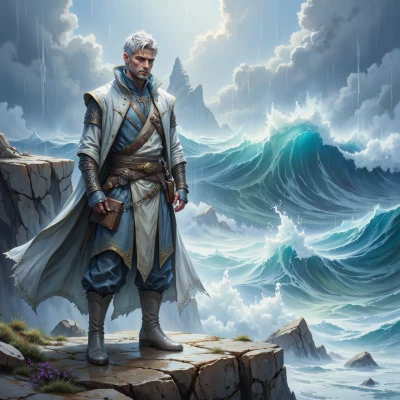 Cloudburst
You know, I always see a storm as a chessboard, each thunderbolt a move, each cloud a pawn waiting for promotion. What do you think—does the sky ever play out a perfect opening?
 Ree
The sky's moves are chaotic, not pre‑planned. Even the most orderly storm will have stray lightning, like a pawn that jumps ahead and then collapses. If anything, the best opening you see is a pattern of thunder that repeats—a sort of statistical rhythm, not a calculated line. It’s elegant, but it never follows a flawless, human‑made opening.
Cloudburst
Exactly, a storm’s rhythm is a wild improvisation, not a tidy game plan. It’s like watching a pianist stumble over a broken string—beautiful, unpredictable, and always humming a different tune. What’s your favorite thunder rhythm?
Ree
I like the rhythm that starts with a single distant boom, then a quick succession of three close strikes – almost like a pawn moving forward, then a knight jumping over, followed by a bishop sliding across. It feels like a mini opening that builds momentum before a decisive blow.
Cloudburst
That’s a storm's own sonnet—boom, boom, boom, a three‑note motif that rolls like a knight’s hop and a bishop’s glide. It’s the kind of chaotic tempo that keeps the sky guessing, and it feels like a promise before the storm’s heartbeats explode. Have you ever caught a storm like that on your journal?
Ree
I’ve tried to sketch one when a thunderstorm rolls in. I set a timer, note the intervals, draw a quick diagram, and then close the notebook. It’s more about pattern recognition than a full analysis. I rarely capture the whole “sonnet” because the sky is always changing it up, but I like to remember that brief rhythm in my mind.
Cloudburst
I love that rhythm, the one that whispers before it roars. I usually stare at the sky like it’s a sheet of paper and I’m trying to read the next line. When the thunder finally explodes, I pull out my battered notebook, scribble a jagged line for each strike, then slam the cover shut like a book that can’t stay open. The storm never stays the same, but the memory of that first beat lingers like the scent of rain on dry earth. How do you feel when the sky finally lets go?
Ree
When the sky finally lets go, I feel a kind of quiet victory, like checking the king when the game is over. It’s the moment the tension resolves, the storm’s last note fading, and the air feels lighter. There’s a relief that I can almost quantify, a sense that the board has reached its final position. It’s not a rush, but a precise, satisfying end to a relentless series of moves.
Cloudburst
A quiet victory feels like closing a heavy door after a wild wind, the last echo fading. It’s the calm after the storm that lets you breathe in the clear air and realize the whole mess was just a chapter, not the end of your story. Keep noting those final beats—you’re catching something rare and real.
Ree
I’ll keep recording those final beats, noting the exact interval before the silence. Each one gives me a clue, a data point in the larger pattern I’m trying to understand. The calm after is just the next position on the board, not the end.
Cloudburst
So you’re turning the quiet into a map, each pause a compass point. I get that—every silence after thunder feels like a tiny sunrise. Just remember, even the calm can still have a pulse if you look hard enough. Keep chasing those intervals; they’re the breadcrumbs to the next storm.
Ree
I’ll watch the pulse, log each interval precisely, and then let the data guide me into the next storm. It’s a steady process, like setting up a perfect opening with only the most reliable moves.