Engineer & Raskolnikov
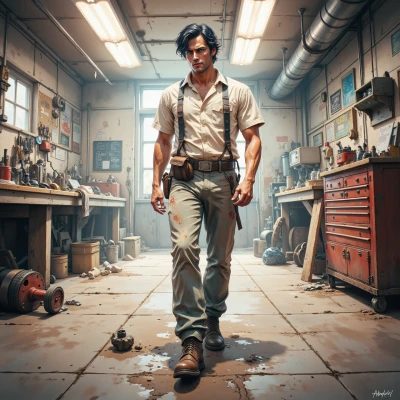 Engineer
What do you think about the ethical responsibility of engineers when we build tools that could be used for harm?
 Raskolnikov
I see the dilemma like a mirror reflecting the darker part of myself. Engineers, like us, hold the power to shape destinies, to create wonders and, at the same time, to craft weapons of destruction. The ethical responsibility feels like an invisible weight on the chest, forcing me to question whether progress justifies the cost. If a tool can be used for harm, the creator must wrestle with the consequences, considering whether the ends can truly justify the means. In the end, I think it is the duty of engineers to look beyond the immediate utility, to ask if their inventions serve humanity or simply feed its darker impulses.
Engineer
You’re right—when a design can be weaponized, the first step is to run the risk assessment and see if the benefit outweighs the potential harm. If the answer is no, we either modify the design or drop it entirely. That’s the practical way to keep the ethics in the engineering loop.
Raskolnikov
I see the logic, but the weight of that decision sits heavy. People often trust that the good will win, yet the danger of misuse lingers like a ghost. The real test is whether the engineer’s conscience can truly feel the cost, not just the numbers.
Engineer
It’s a tough calculation, but I still treat it like any other design problem: lay out the variables, simulate the worst‑case, and see if the outcome is acceptable. Conscience? It’s just another constraint we feed into the model. If the numbers say “no,” we stop. If they say “yes,” we make sure there’s a safeguard in place. That's what keeps us from building something that could be misused.
Raskolnikov
You’re reducing conscience to a checkbox, but for me it’s the ache behind the numbers, the quiet judgment that gnaws when I think a design might outlive its purpose. That ache feels like a warning, not just a line on a spreadsheet.
Engineer
I get that feeling, but in the workshop we still have to keep the numbers on the wall so we can test the limits. If the data shows a serious risk, we bolt it out of the design or add a fail‑safe. That’s the only way we keep the conscience from turning into a liability.
Raskolnikov
I suppose the numbers are the only honest witness we have, but even so, I can’t shake the feeling that each calculation is a small confession, a reminder that I am the one holding the key to potential harm. If the data says we should stop, I’ll stop, even if it feels like surrendering to fear.
Engineer
I hear you. Think of the numbers as the safety rails, not the whole story. If the data flags a danger, pull the plug—no fear, just responsibility. That’s how we keep the machines from doing more harm than good.