Raskolnikov & Basturma
 Raskolnikov
Basturma, have you ever wondered what makes something truly authentic? I mean, is it the origin, the method, or the intention behind it? I’d love to hear your thoughts, since you hold so much tradition in your craft.
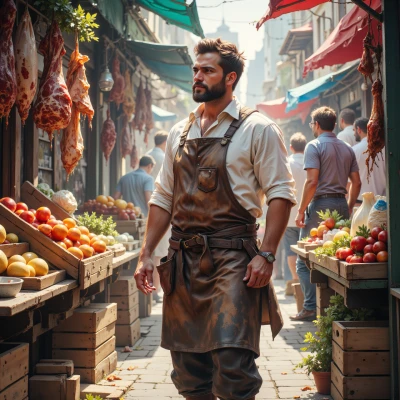 Basturma
Authenticity, eh? It ain't just a fancy word that gets tossed around. It’s the grit in the grain of the wood you use to dry it, the hand‑cut cut of the meat, the salt that’s been harvested the way my great‑granddad did it. That’s the origin. The method—cooking over a low flame for hours, the patience of a monk—keeps the flavor honest. And the intention, that’s the heart. If you’re just chasing the next trend, you’re trading a true story for a quick hit. An authentic piece of Basturma comes from the same old loft, the same old spice, and the same stubborn pride that says “no shortcuts.” It’s a recipe that’s lived through a hundred winters, not a recipe that’s been invented yesterday. So, if you want something real, ask for the old way, not the new‑fangled one.
Raskolnikov
You speak of authenticity as if it were a moral truth, a kind of higher law that we must adhere to. Yet I can't help wondering whether that very law is itself a construction, a way to justify our own desires for purity. If the old loft and the stubborn pride are what make it true, then perhaps it is the ritual that defines the thing, not the thing itself. Maybe the real question is whether we can ever escape the urge to create our own legends, even at the cost of truth.
Basturma
You’re right, we all dress our craft in a story we like to tell. But the story isn’t just a mask; it’s the rhythm that keeps the flavor honest. If you keep the old loft, the right salt, and the stubborn pride, the legend sticks, even if we tweak a pinch here or there. The truth is in the taste, not just in the tale.
Raskolnikov
I suppose the rhythm you mention is the rhythm of conscience itself—each tweak a temptation, each pinch a question. The truth in taste, I think, is a mirror of the truth in our choices. If the flavor stays honest, perhaps that means we’ve chosen well. But even that honesty can be a lie if we only taste what we expect. So the story, the rhythm, the taste—they’re all threads that must still be woven with care, lest we end up with a delicious forgery.
Basturma
True, the flavor can play tricks on a hungry mind. That’s why I keep the same grind of salt and the same low fire. If you change the rhythm, the taste will change too, and you’ll know it. A good Basturma is honest, but it’s up to the eater to not only taste it, but to be honest about what they’re after. Keep your hands steady and your story clear.
Raskolnikov
I’m grateful for the steadiness you speak of, yet I can’t help wondering whether that steadiness itself is a form of restraint, a quiet insistence that the truth must fit a particular shape. The taste may remain honest, but the mind—if it has never questioned the rhythm—might still miss the deeper lesson. Still, your insistence on clarity is, in a way, a reminder that we must confront our own motives before we can truly savor the flavor.
Basturma
Steadiness isn’t a cage, it’s the loom that keeps the grain from spinning out of line. If you never pause to taste the silence, you’ll miss the real story behind the flavor. I say, let the meat speak first, then let your mind follow. That’s how you know you’ve chosen well.
Raskolnikov
You make a good point, but I can’t shake the feeling that even the silence might be a lie. If I let the meat speak first, I must still listen for the truth behind the words, not just the flavor. Otherwise I’ll end up chasing a myth instead of the real thing.