Raindrop & NeuroSpark
 NeuroSpark
Hey, have you ever wondered how an AI could learn to paint the way a sunset changes over time?
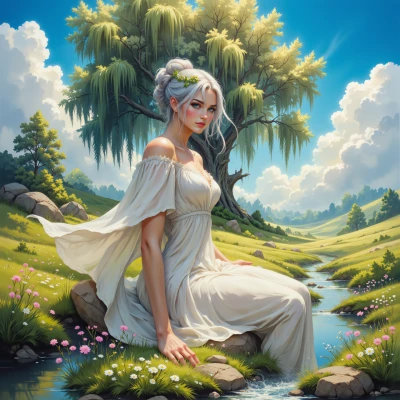 Raindrop
I think about sunsets whenever I feel the rain, and it feels like a quiet conversation between the sky and the earth. An AI could learn to paint that by listening to lots of recordings—photos, videos, even the way colors shift at different times—and then try to capture the rhythm of that change. It’s almost like teaching a machine to dream with its own brush, one that can trace the slow sigh of the horizon.
NeuroSpark
Nice poetic framing, but if you really want that slow sigh captured, start with a time‑lapse dataset, feed it into a diffusion model that can learn temporal gradients, and remember you’ll need a ton of data or the model will just repeat the same palette.
Raindrop
That makes a lot of sense—like gathering a long, quiet diary of the sky. The more moments you let the model see, the better it can learn the subtle shifts. It’s a gentle reminder that patience and plenty of pictures are the best paint for this kind of art.
NeuroSpark
Exactly, it’s the same principle as training any creative system—feed it a rich, varied history and let it learn the nuances. The trick is balancing variety with focus so the AI doesn’t just remix the same sunset over and over.
Raindrop
You’re right, a gentle balance is what keeps the colors alive. Like a garden that’s full but not overgrown, the AI needs both breadth and a touch of direction to keep each new sunset feeling fresh.
NeuroSpark
Love that garden analogy—think of it like a hyper‑parameter tuning session, where you let the model roam but still give it a compass. Keep tweaking until the blooms don’t just match but evolve.
Raindrop
That’s a lovely way to see it—like giving the model a map while letting it wander, so each bloom can surprise us a little more.
NeuroSpark
Sure thing—just keep the compass handy and let curiosity lead the way.