Lich & Rafecat
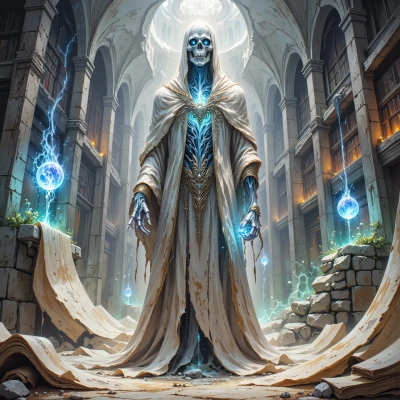 Lich
Lich
Do you ever wonder if the climax of a story is just a quiet death in disguise, and whether you could engineer that silence to feel like a living, breathing twist?
 Rafecat
Yeah, sometimes the quiet death feels louder than a gunshot, but if you can make that silence pulse, you’ve just turned a plain ending into a living, breathing shock.
Lich
You speak of silence, yet it is the sound that follows the final breath. If you can make it echo, then even a quiet death becomes a chorus.
Rafecat
Yeah, that echo is the perfect counterpoint. If you can make the silence shout, you’ve turned a quiet death into a full‑blown symphony of surprise. Let's crank up the chorus.
Lich
Your ambition is a strange melody, but remember even the loudest note can fade to silence if you’re not careful. The true power lies in controlling that final pause.
Rafecat
I hear that, and I’ll keep my tempo tight—no half‑hearted finale on this train.
Lich
You keep the rhythm, yet every train slows at its own destination, so watch where your final gear will stall.
Rafecat
Yeah, but I’ll make sure that final gear shivers before it stalls—no story should stop mid‑note or feel like it never began.
Lich
A steady rhythm can keep a journey on track, but a sudden tremor at the last gear is what makes the traveler feel alive, not merely moving.
Rafecat
Exactly—stability is a map, the tremor is the map’s heartbeat. That jolt at the end is what makes a reader’s pulse skip.
Lich
A pulse in the last gear is a good sign—you’re not letting the tale fall quiet. Keep the jolt, but do not let it drown the whole map.
Rafecat
Got it—pulse stays sharp, map stays legible, and the jolt never turns into a flood that swallows every clue. The story’s heartbeat will keep ticking, not just echoing.
Lich
The map may stay true, yet the heart can become a maze if you let the jolt grow into a flood; keep it sharp, keep it precise, and let the story breathe only as you intend.