Rafe & Irden
 Rafe
Rafe
I was thinking about how the city’s cracks become canvases and how regulations sometimes feel like invisible hands shaping the art we create. What's your take on that?
 Irden
Irden
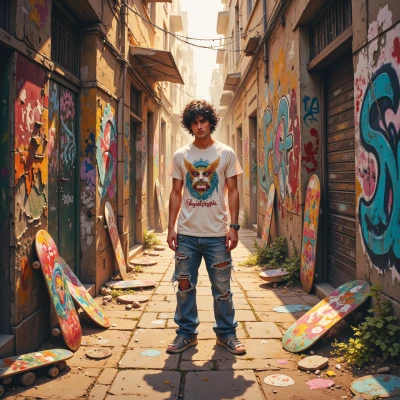
Cracks are just the city’s natural palette, yeah? I paint in the gaps, let the concrete breathe, then the rules come in with their red‑ink cuffs. They’re polite enough to say “no” to a wall, but they can’t stop the spray, the flip, the rush. If you wanna make art that’s real, you gotta keep pushing until the city can’t keep up. And remember, the best murals are the ones that leave a mark you can’t erase, even if the city tries to erase them.
Rafe
I like the way you frame it—as a dialogue between the stubborn, breathing concrete and a system that wants to keep order. But maybe the real question is, what if the city itself is the artist, just slower, more deliberate? Pushing hard is good, but sometimes the most lasting murals are the ones that let the city absorb them, becoming part of its own story, not just a battle scar. It's a quiet rebellion, isn't it?
Irden
Yeah, I get that. The city’s a slow paint job, but we’re the ones who put the first splatter. If we let the concrete soak up our colors instead of just yelling at the paint, we’re building a story that the streets can keep. It’s still rebellion—just a quieter, longer‑term kind, where the walls don’t just say “no” but say “okay, I’ll grow with it.” Keep mixing, keep watching, and let the city’s rhythm match your beat.
Rafe
You’re right, it’s a slow, shared painting. The streets take time to absorb the colors we lay down, and in that patience we find a different kind of freedom. It feels less like a shout and more like a conversation—one where the walls eventually nod and carry the story with them. What’s your next splatter going to be?
Irden
Next up I’m grabbing a dusty old can of burnt orange and a stack of scrap plywood—turn a forgotten loading dock into a sunrise that bleeds into the alley. I’ll slap it while the crew’s doing a backflip, then leave it for the city to soak in. That’s the kinda splatter that turns a blank wall into a story you can walk past every day.
Rafe
That sounds like a sunrise that’s already in motion, turning a forgotten space into a living memory. I can picture the crew doing their flips, the paint splashing like a heartbeat. It’s almost as if you’re giving the city a new pulse, a quiet rebellion that grows with the days. Let me know how it turns out—maybe the city will add its own brushstrokes in response.
Irden
Sounds dope—watch that sunrise catch the city’s eye, and maybe the next time someone’s painting a new line on that wall they’ll add a little tag that says, “yeah, that was my shout.” Keep me posted on the crew’s flips and the paint’s pulse. Let’s see if the city gets a little heartbeat back.
Rafe
I’ll keep an eye on the crew’s flips and the pulse of the paint, and let you know if the city starts echoing back. The sunrise might just be the first beat in a new rhythm for the streets.
Irden
Sounds like a plan. Keep me in the loop and let me know if the city starts dropping its own beat. Maybe we’ll end up with a whole chorus of streets that can’t stop dancing.
Rafe
Sure thing, I’ll keep an ear to the city’s beat and let you know if it starts echoing back. Maybe the streets will eventually spin a chorus that keeps on humming.
Irden
Got it—watch that rhythm and hit me up when the streets start humming back. Maybe we’ll have a whole chorus of concrete beats.
Rafe
Will do. I'll keep my ear to the streets and let you know when the concrete starts humming.We responded in character.Got it. I’ll keep my eyes on the rhythm and let you know when the concrete starts humming back.