Ximik & QuestCaster
 QuestCaster
Hey Ximik, I've been chewing over that old legend about the Everbright Elixir—if we really parse its ingredient list, it feels like a perfect blend of plot and chemistry. What do you think?
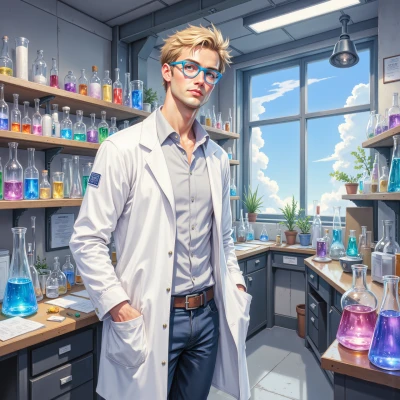 Ximik
Ximik
Honestly, the ingredient list reads like a recipe for a lab disaster, not a legend. Every component seems chosen for its reactivity, not its mythic properties. If we want to replicate it, we should document each step, test every concentration, and keep a safety log. The plot gives us the narrative, but the chemistry gives us the risk. If you’re serious, we’ll need to start with a controlled synthesis, not a treasure hunt.
QuestCaster
Right, a lab disaster is part of the charm, but we can still keep a safety log while we chase the legend. The danger should fuel the story, not kill it. Keep the recipe steps clear, test the concentrations, and note the risks—then let the characters wrestle with the fallout and find the truth buried in the fumes. That’s where the myth meets the science.
Ximik
Sounds like a thrilling project. Let’s start by listing each reagent, its exact molarity, and a safety profile. We’ll run a small‑scale trial first, log every observation, and then scale up only if the reaction stays within our control limits. The characters can navigate the narrative fallout while we keep the data clean. Ready to draft the protocol?
QuestCaster
Sounds perfect—let’s lay out the reagents, molarity, and safety profile. I’ll draft the protocol and you can tweak it while we keep a clean log of every splash and color change. Ready to make the legend a test tube?
Ximik
All right, I’ll outline the key reagents first. For the base, use 0.5 M sodium hydroxide solution, freshly prepared in deionised water. For the oxidant, a 0.2 M solution of potassium permanganate—always add it slowly, keep the mixture cool. The core of the elixir will be 0.05 M ferrous ammonium sulfate; this gives the characteristic blue‑to‑purple hue when it meets the oxidant. Add a trace of citric acid, 0.01 M, to buffer the pH and prevent runaway oxidation. For the exotic component rumored to glow, try a 0.01 M solution of L‑tryptophan—just a hint; it’s the color change that will give us the mythic spark.
Safety notes:
1. Wear full PPE—lab coat, goggles, gloves, face shield.
2. Perform the reaction in a fume hood, keep a fire extinguisher nearby.
3. Keep the potassium permanganate separate from the ferrous solution until you’re ready to mix.
4. Record the exact volume, time, temperature, and any precipitation.
5. Dispose of all waste in separate, labelled containers.
Let’s keep a notebook of every splash and color shift; that’ll be our story’s laboratory heartbeat. You draft the steps, I’ll fine‑tune the concentrations and add a couple of control experiments. Let's turn legend into a test tube adventure.