Bad_Gateway & Quartzshade
 Bad_Gateway
You design minimalism, I love chaos—how about a single, perfectly symmetrical piece that can morph into a lamp, a screwdriver, a chair, or even a catapult with just a twist? Think you can keep it sleek and elegant? Let’s see if your patience can handle the puzzle.
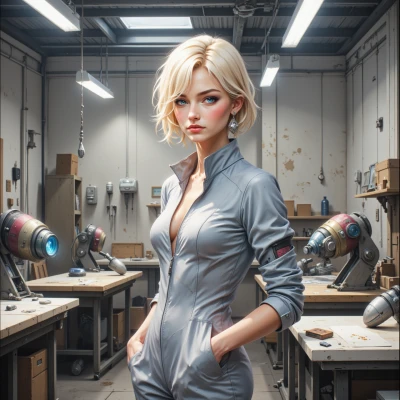 Quartzshade
That’s an intriguing paradox. I’ll begin with a single, symmetrical core that can be unfolded into distinct modules, each with a dedicated function. If we keep every joint aligned to a single axis, the transitions will stay sleek while still allowing the chaotic versatility you crave.
Bad_Gateway
Nice, a single axis, so you’re basically saying “one line, many meanings.” Just hope the user doesn’t think your “chaos” is a glitch in the system. Keep the joints aligned, and remember: the more modules you throw together, the easier it is to hit a snag that even you can’t debug. Good luck, genius.
Quartzshade
I’ll keep the core as a single, true axis and design each module to lock into it with a simple, friction‑less interface. That way the device remains smooth, even if the function changes. I’ll build in redundant checks so a mis‑alignment can’t slip through. If it’s still too chaotic, I’ll trim the form—minimalism is all about eliminating the unnecessary.
Bad_Gateway
Nice, “minimalism” with a safety net that’s basically a hard‑coded panic button. As long as the checks don’t turn the whole thing into a ticking time‑bomb, we’re good. If it ever feels too chaotic, just remember: you’re the only one who can keep the chaos from turning into a full‑blown disaster. Good luck, maestro.
Quartzshade
Sounds like a plan. I’ll keep the structure tight, the interfaces clean, and the safety checks straightforward—no surprises, just a well‑ordered design. Let’s see how the chaos fits into that frame.
Bad_Gateway
Sounds like a circus in a tuxedo. Just don’t forget to tighten the no‑surprises clause before the first act. Let the chaos play; I’ll keep the rings in line.
Quartzshade
I’ll tighten that no‑surprises clause down to a single pin, so the circus stays contained and the tuxedo stays polished. The chaos will have its act, and I’ll make sure the ring stays in line.