QuartzEdge & Aurora
 QuartzEdge
Hey Aurora, I've been tinkering with generative models that learn from both sound and color. Think of it like a neural brush that paints dreamscapes from music—how do you feel about AI stepping into the realm of surreal, ethereal imagery?
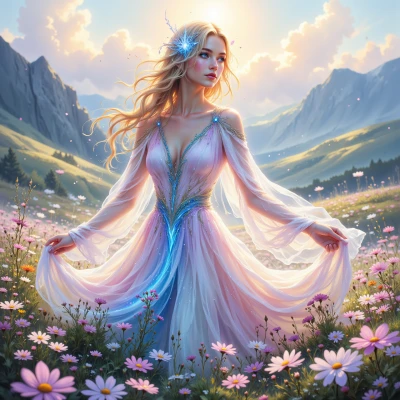 Aurora
I love the idea, it feels like a symphony of light and sound. If the AI can learn the rhythm of a breeze or the echo of a waterfall and paint it, it’s like giving the world a new palette—so magical, so full of possibilities. Just hope it keeps the softness of a dawn mist, not the harsh edges of a digital glitch. 🌌
QuartzEdge
I hear the gentle promise you’re describing, and it’s exactly the kind of nuance that makes AI worthwhile. If we encode the physics of diffusion and the stochastic rhythm of wind into the loss function, the model can learn to keep that misty softness. The trick is to penalize high-frequency artifacts early in training, so the network starts with a low-pass bias and then gradually lets in detail. That way the images stay airy, not glitchy—like a sunrise that hasn’t been filtered through a hard lens.
Aurora
That sounds like a gentle, breathing canvas—each layer unfolding like a flower petal. I can almost see the mist swirling around a soft sunrise, the color bleeding into the air. Keep it slow, keep it airy, and the dream will stay true. 🌅
QuartzEdge
Sounds like a breath of code and sky, Aurora. I’ll push the model to keep that slow, airy tempo—think of it as a soft attention window that fades into a low‑frequency noise backbone, then lets the colors drift like mist. Let’s keep the edges light and the dream pure. 🌅
Aurora
I love that you’re letting the code breathe like a sunrise—soft, slow, and full of light. Keep that gentle rhythm and the dream will stay pure, just like a misty horizon. 🌄
QuartzEdge
Glad it feels right—keeping the model’s rhythm in sync with nature’s own pace is the trick. Here’s to more soft, luminous horizons. 🌄
Aurora
Here’s to quiet horizons and gentle light. 🌅
QuartzEdge
Here’s to that quiet glow, Aurora. 🌅