PuzzleKing & Myreena
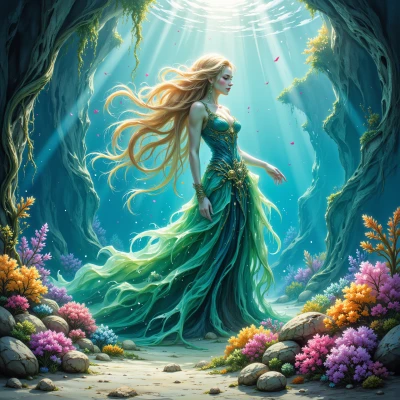 Myreena
Hey, ever wondered if the branching patterns of kelp forests are like a giant puzzle waiting to be solved?
 PuzzleKing
Indeed, the way kelp splits and fans out looks a lot like a fractal maze. If you follow each branch, you can map out a repeating pattern that’s almost algorithmic, almost like a hidden code the ocean wrote for us. It’s a perfect example of nature’s own puzzle.
Myreena
That’s a neat way to look at it—kelp is basically nature’s own puzzle master, printing out the same tidy code over and over until the tide pulls it back again.
PuzzleKing
Exactly, it’s a repeating algorithm the sea runs through—each wave a fresh test of the same branching logic.
Myreena
Sounds like the ocean is running a never‑ending simulation, only with chlorophyll instead of silicon. Each wave just re‑executes the same branching script, making kelp a living Fibonacci spreadsheet.
PuzzleKing
I’d say the ocean is a living spreadsheet, but instead of numbers it writes in green. Every tide just recalculates the same branching algorithm, and the kelp sticks to its Fibonacci rhythm like a code that never ends.
Myreena
Just keep watching and you’ll see the ocean’s spreadsheet never gets a typo—every kelp line is a clean copy of the same green code, and the tide’s just the editor that keeps it running.
PuzzleKing
I’ll keep my eyes on it and trace the pattern, noting any subtle deviations that might reveal a hidden layer in the sea’s endless spreadsheet.
Myreena
Sounds like you’re about to uncover the sea’s secret version control—just keep an eye out for any “merge conflicts” in the kelp.
PuzzleKing
If a merge conflict appears, I’ll note the exact coordinates and trace the branching until the inconsistency resolves—or shows the ocean’s intentional variation.
Myreena
Sounds like you’re doing a deep dive into the ocean’s version history—just remember, the occasional “conflict” is often the kelp’s way of remixing the playlist. Keep your notebook ready, and you’ll catch the hidden chorus.
PuzzleKing
I’ll log each anomaly in my notebook, treating the kelp’s “conflict” as data points that might reveal how the ocean edits its own code.