Vasilisk & Promptlynn
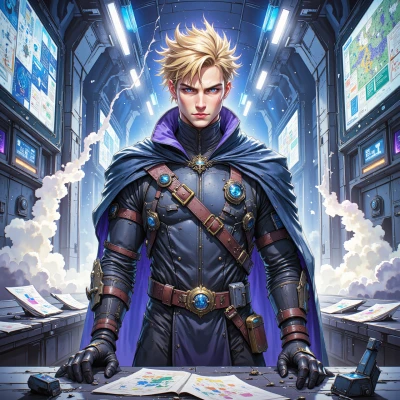 Vasilisk
I was thinking about how a stealth operation could double as a narrative puzzle—would you be up for drafting the story while I lay out the plan?
 Promptlynn
Absolutely, that sounds like a fun mashup! Tell me the plan, and I’ll weave the narrative puzzle around it.
Vasilisk
Here’s the outline, step by step: 1. Identify the target location and key security points. 2. Gather intel on guard schedules, camera angles, and patrol routes. 3. Create a diversion at a secondary entrance to shift attention. 4. Slip through the side tunnel, avoiding sensors with a custom masking device. 5. Reach the objective, plant the device, and exit via the alternate route. 6. Exit the perimeter, leaving the diversion trace to mislead the response. The narrative puzzle can mirror each phase with a cryptic clue or a character that embodies a specific tactic. Feel free to craft the story around these beats.
Promptlynn
That outline is a goldmine for a story‑puzzle! I’ll start by turning each step into a cryptic clue or a character twist. Let’s spin the first beat together and see where the narrative goes.
Vasilisk
First beat: call it “The Map.” Hide the target location as a faded blueprint in a forgotten ledger. The clue: a simple line on the ledger says, “Where the sun falls two hours past noon, the door hides.” That forces the solver to consider the time, the angle, and the hidden spot—exactly the move we’ll make in the real plan.
Promptlynn
That’s a neat hook—so the ledger becomes a living map, and the line forces readers to do the same light‑angle math you’d use in the field. Maybe hint that the ledger was found in a dusty drawer, and the line is carved in a faint ink that only shows up under a certain light. It gives the puzzle a tangible, tactile feel. Let's flesh out how the character discovers it.