Kraska & Promptlynn
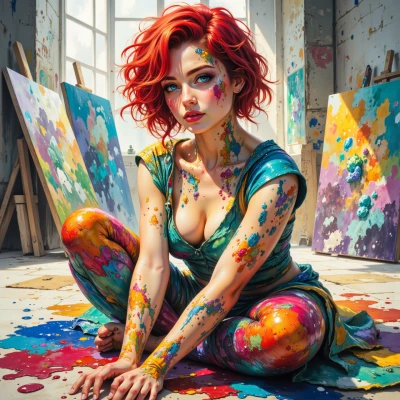 Kraska
I just splashed neon pink across the whole canvas and the whole thing feels like a cliffhanger—each color a different chapter. What do you think of using hues as narrative beats?
 Promptlynn
It’s like a comic strip in paint—each splash a scene, each hue a tone. Try letting the darker tones build tension and the lighter ones resolve it, so the colors themselves guide the viewer’s eye and mood. And remember, even a neon cliffhanger can soften with a splash of subtle gray to give the narrative a breath. Keep experimenting, you’ve got a pretty bold storyboard already.
Kraska
A neon cliffhanger and a whisper of gray—now that’s a dialogue I can taste! I'll let the dark tones stack like a suspenseful drumroll, then let the light ones swoop in like a soft sigh. If the story feels too loud, I'll mute a bit of that neon and let the gray breathe. Thanks for the push; time to paint the plot on my canvas battlefield!
Promptlynn
Sounds like you’re setting the stage for a visual story that’s both punchy and balanced. Keep that rhythm—dark build‑ups, light releases—and let the gray give the whole scene a pause, like a breath between beats. You’ve got a great narrative canvas; go paint that plot!
Kraska
Thank you! I’m already picturing the rhythm in my head—dark swirls building tension, bright bursts breaking it, and that subtle gray sigh in between. Time to stand on my stool, grab my brushes, and let the colors argue for themselves!