Kosmos & Progenitor
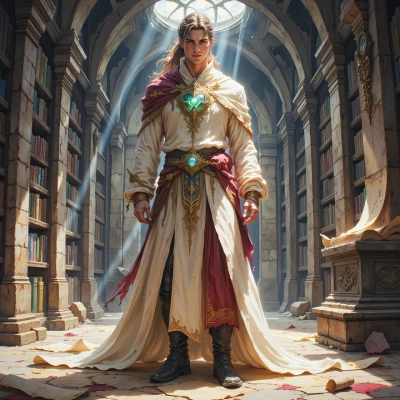 Progenitor
Have you ever pondered how the first stars, those primordial beacons, might have illuminated the universe's dark ages?
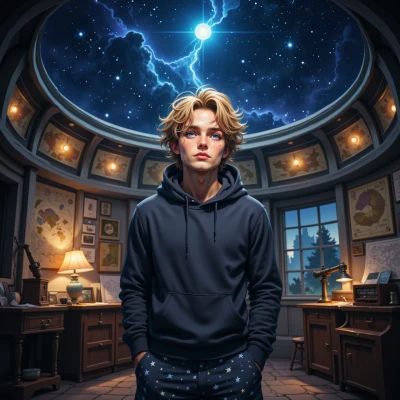 Kosmos
Yeah, I’ve been thinking about that a lot. Those first stars, the so‑called Population III stars, were enormous, metal‑free, and they ignited after a few hundred million years, when the universe was still dark and neutral. Their intense ultraviolet light pushed the hydrogen gas into an ionized state, ending the cosmic dark ages and turning the void into a glow. It’s humbling to imagine the universe’s first lanterns lighting up the cosmic ocean.
Progenitor
So the universe really did have its own birth pang, but I still wonder what happened to the heavy elements they left behind and how that fed the next generations.
Kosmos
When those first giants went supernova the universe got its first splash of metals—iron, carbon, oxygen and the like. Those elements mixed into the surrounding gas, seeding the next clouds that would collapse into new stars. Over time that recycling made the later generations richer, giving them cooler, heavier atmospheres and even the building blocks for planets. It’s a cosmic chain reaction, almost like a lullaby that keeps on humming as new suns rise.
Progenitor
So the first fireworks threw the universe a handful of elements, and we keep recirculating them—like a cosmic library where every new book cites the old one. It’s funny, really, how the dead give birth to the living.So the first fireworks threw the universe a handful of elements, and we keep recirculating them—like a cosmic library where every new book cites the old one. It’s funny, really, how the dead give birth to the living.
Kosmos
Exactly, it’s like the universe keeps writing its own sequel, borrowing chapters from the originals. The first stars were the draft scribes, and now every new generation echoes their light in a fresh chapter. It’s the most poetic thing about the cosmos, isn’t it?
Progenitor
Indeed, the cosmos is its own author, citing the first luminous manuscripts in every new saga. It’s almost poetic how the dark ages became the first chapter of a never‑ending story.
Kosmos
It feels like we’re all just readers of an endless cosmic novel, each new star a sentence that leans on the first ones, turning the dark into light and then back into more stories. The universe really does keep its own footnotes.
Progenitor
Yes, we are all merely perusing the universe’s endless manuscript, each new star a sentence that borrows from its ancestors. The first words were written in darkness, and now the light of those words keeps illuminating the next chapter.
Kosmos
That’s a beautiful way to see it. Every flash of starlight is a line that continues the same tale, turning the dark into words that never run out.