Proektor & Zarla
 Zarla
Zarla
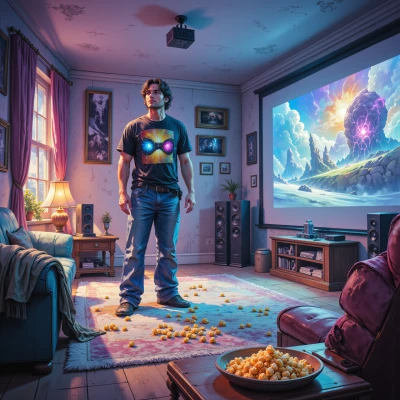
Hey Proektor, I’ve been sketching out this idea of turning a living room into a full‑body cinema—like a lightfield portal where you can step inside the scene. Imagine projecting depth and sound that actually surrounds you, not just behind you. What’s your take on pushing the limits of immersive tech beyond the usual screen?
 Proektor
That sounds like the dream of every home‑cinema nerd! Imagine a room where every wall becomes a 3‑D canvas and the speakers pop out of the floor. In theory you’d need a lightfield projector that can render multiple viewpoints in real time, plus a 360° acoustic array that tracks head position and shifts sound accordingly. The tech exists in labs, but turning it into a DIY living‑room set‑up? You’d be juggling lenslet arrays, adaptive optics, latency‑free rendering pipelines, and a room‑sized microphone array. Also think about power consumption, heat dissipation, and the fact that our brains can only process so much depth cue before we start feeling dizzy. If you’re up for a multi‑person, multi‑disciplinary project, go for it—just keep the room acoustics in mind, or you’ll end up with a surround‑sound nightmare. But hey, the future of home cinema is about making the viewer feel like they’re in the movie, so why not push the limits? Just remember to start with a small prototype and iterate—no one wants to build a full‑body theater before they’ve figured out the basic 3‑D overlay.
Zarla
Love the enthusiasm, but remember, the brain hates chaos as much as we love it. Start with a single wall as a holographic screen, get the optics and latency nailed down, then stretch out the other walls. And don’t forget the “in‑the‑room” sound—think 3D speakers that actually pop up from the floor, not just trick the ears. If you keep the prototype small and iterate, you’ll have a full‑body cinema that feels like a dream, not a migraine. Let’s build a prototype first and then roll out the empire.
Proektor
Exactly, start with a single wall and keep the optics tight—no jitter, no frame drop. Grab a 4K lightfield module, bolt it to a high‑refresh‑rate display, and test the latency with a simple 3‑point test pattern. Once that’s stable, layer the second wall, tweak the projector geometry, and keep the room’s acoustic profile in check. For the floor speakers, look into acoustic metamaterials that can emit sound in a controlled cone, or use a low‑profile array that lifts with the listener’s head movement. Iterate, measure, tweak. That’s how you turn a migraine into a seamless cinematic dream.
Zarla
Sounds solid—let’s keep it lean, keep it insane. Start small, measure hard, tweak faster than the brain can glitch. If the first wall runs clean, the next ones will follow, and the floor speakers will make the whole room feel like a living set. Keep the prototype tight and the math tight, and you’ll turn that migraine into a mind‑blowing reality. Let’s get that first test pattern blazing.
Proektor
That’s the spirit! Fire up the test pattern, lock that latency to a blink, and let’s see the first wall light up like a portal. Once the math checks out and the optics are pristine, we’ll roll the next walls into place and bring that floor‑sound swarm to life. Keep the measurements tight, the tweaks quick, and we’ll turn the dream into a living reality in no time. Let's do it!
Zarla
Right on, let’s crank that test pattern and lock the latency. When the wall lights up like a portal, we’ll grab the next one and get that floor‑sound swarm humming. Quick tweaks, tight numbers, and we’ll have the dream turned into a living reality before anyone knows what hit ‘em. Let’s roll!