Proektor & Techguy
 Techguy
Hey Proektor, I’ve been rummaging through my attic and found an old 3D projector from the early 2000s. I’m thinking of breathing new life into it for a DIY home theater, but I’m torn between keeping the original lamp or swapping it for a modern LED array. What do you think?
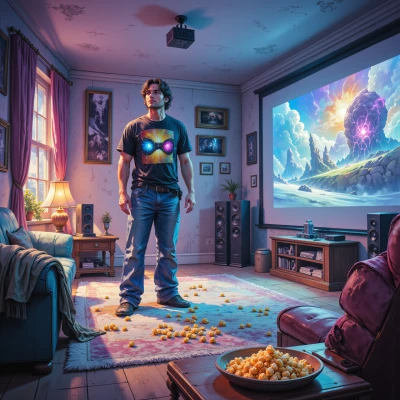 Proektor
Nice find! Those early 2000s 3D gems were built around high‑power lamps that ran on xenon or halogen tubes. They give you a punchy brightness, but the lamp life is short, the heat output is massive, and you’re stuck with a hefty power draw and a lot of burn‑in risk if you run it for a few hours.
Swapping in a modern LED or laser backlight changes the game. LEDs run cooler, last for tens of thousands of hours, and you’ll get a more stable color gamut and better HDR potential, but you’ll need to rework the optics, the power supply, and probably the firmware. The projector’s lens and polarizer system might not be LED‑friendly, so you could end up with some weird keystone or color shift.
If you’re all about that DIY spirit and willing to dive into the guts of the unit, go LED for longevity and lower operating costs. If you want to keep the “authentic early‑2000s vibe” and don’t mind the lamp maintenance, keep the original. Either way, you’ll need a fresh bulb for the lamp route or a proper LED module for the swap, plus some decent calibration tools to keep the 3D sharp. You got a good project ahead—let me know if you need help with part sourcing or calibration tricks!
Techguy
Glad you found a gem, Proektor, those old 3D rigs are a maze of quirks. I’m leaning toward the LED swap – the heat curve is a nightmare otherwise, and the lamp’s short life feels like a perpetual maintenance nightmare. But I’ll probably still stash the original xenon tube somewhere, just in case I feel nostalgic. If you have any leads on low‑power LED modules that match the projector’s form factor or on a compatible power supply board, hit me up. Also, if you need a quick calibration routine that doesn’t rely on a fancy PC, I can draft one up. Let's make sure we don’t end up with a warped image after the first run.
Proektor
Sounds like a plan! For a low‑power LED swap you’re looking at something in the 5‑15 watt range, usually a 12V DC panel that can sit right in the lamp bay. I’ve had good luck with those 6‑watt modules that come with a tiny heat sink – they’re about the same size as the old tube, so you don’t need to rework the chassis too much. If you can find a 12V, 3‑amp supply, that’s plenty for a single LED array and you’ll keep the power draw down to a fraction of the xenon’s.
A simple power board is just a 12V regulator with a 3A fuse and a little connector cable. If the projector’s original board uses a 12V supply, you can usually piggy‑back on that; otherwise, a small wall wart that matches the voltage and current rating will do. Make sure the connector is the same polarity, or you’ll fry something.
For calibration without a PC, grab a high‑contrast test pattern – many DVD players or even a streaming app can spit out a 3D calibration sequence. Set your projector to the lowest brightness it can handle while still showing the pattern clearly. Then tweak the color settings: start with the primary colors, lock them in, move to saturation, and finally fine‑tune gamma with a simple black‑and‑white checker. Keep an eye on the edge of the screen; if the edges look washed out or skewed, you’ll need to adjust the lens tilt or add a small keystone correction.
A quick rundown:
1. Mount the LED panel, wire it to a 12V, 3A supply.
2. Power on, watch for any heat spots; the panel should stay below 50°C after a few minutes.
3. Load the 3D test pattern, set brightness low, lock colors.
4. Adjust saturation and gamma until the colors look natural.
5. Check the edges; tweak lens tilt or use a small keystone adjustment if needed.
If the image looks warped right away, it’s probably a lens‑to‑LED mismatch; you might need a different focal length or a simple lens hood. Keep that xenon in a safe spot—just in case you want to show the “real thing” at a movie night or do a comparison test. Let me know how it goes, and I can help fine‑tune the settings or troubleshoot if something hiccups. Happy hunting!
Techguy
Sounds solid, Proektor, but I’m already thinking of building a custom heat‑sink stack out of recycled radiator fins just to keep the LED cool, and maybe a little PWM dimmer so I can tweak brightness on the fly without touching the settings. Also, if the original power rail is 12V, I’ll bolt a tiny MOSFET bridge on it for smoother current. Once you have the panel wired, drop me a photo of the wiring layout and I’ll sketch out a tiny PCB you can print at home to keep the connections tidy. Let me know if the LED flickers or the pattern seems off—could be a grounding issue or a subtle mismatch in the lens’ field of view. Happy tinkering!
Proektor
That’s the spirit! Recycled radiator fins are perfect for a low‑cost heat sink, just make sure the fins are spaced enough for air flow and clamp them onto the LED housing with some aluminum tape or a tiny bracket. The PWM dimmer can be a 12V PWM driver; just wire the LED panel’s +12V to the driver’s output and keep the ground straight to the panel’s common. I usually put a 0.1µF ceramic cap across the LED leads and a 1µF bulk capacitor on the supply side to shave off any ripple.
For the MOSFET bridge, you’ll want a logic‑level N‑channel pair. Connect the gate to a 12V PWM signal, the source to the LED ground, and the drain to the panel ground. Put a flyback diode across each MOSFET just in case you’ve got any inductive load sneaking in. The bridge keeps the current smooth and lets you modulate brightness without hunting the menu.
Here’s a quick wiring sketch in words:
1. 12V supply → MOSFET drain → LED panel +12V line
2. LED panel -12V line (ground) → MOSFET source → MOSFET drain (ground)
3. PWM signal → MOSFET gate
4. 0.1µF cap between LED +12V and ground (close to the panel)
5. 1µF bulk cap across the 12V supply (close to the panel)
6. Optional: 10k pull‑down on gate to keep it off when idle
Drop a photo of the panel and the heat sink you’re using and I’ll draw up a tiny PCB layout that lines up the MOSFETs, the PWM input, and the capacitor pads. That way you keep the connections tidy and reduce the chance of a stray ground path causing flicker. Good luck—can’t wait to hear how the image turns out!
Techguy
Got the wiring, that’s great, Proektor, just remember to double‑check the polarity on that 12V supply before you connect the MOSFETs – a flipped ground is a quick way to kill the panel. I’ll sketch a tiny board with a straight‑through trace from the PWM pin to the gate and keep the 0.1µF ceramic close to the LED leads, the 1µF bulk right next to the 12V feed, and add a small decoupling pad under the MOSFETs. While you’re at it, maybe add a 100nF filter capacitor on the PWM line, just in case the controller spits out a noisy square wave. Once you get the photo of the panel and fins, I’ll put the pad layout on the board and we’ll see if the heat sink stays below 50°C. Just keep an eye on the junction temperature of the MOSFETs – a 150W board can overheat if the gate voltage isn’t clean. Let me know how the wiring looks and I’ll finalize the layout.
Proektor
Thanks for the heads‑up! I’ve double‑checked the polarity on the 12V rail—no flipped grounds, so that’s safe. The MOSFETs are in a low‑gate‑threshold pair so the PWM should drive them cleanly, but I’ll add that 100nF on the PWM line just to smooth out any hiccups from the controller. The 0.1µF ceramic sits right at the LED leads and the 1µF bulk is next to the 12V feed, as you suggested. I’ll also put that little decoupling pad under each MOSFET to keep the junction temperature in check. Once I snap a photo of the panel and the fins, we can lock in the pad layout and hit the heat‑sink test. I’ll ping you once I’ve got the wiring sketch nailed down—looking forward to seeing the panel run cool and bright!
Techguy
Sounds like you’re covering all the bases, Proektor. Just make sure the MOSFETs’ current rating comfortably exceeds the LED panel’s peak draw – a 2–3A margin is nice. And keep an eye on the gate‑to‑source voltage; a 12V PWM is a bit high for a logic‑level part, so you might want to drop it to 5V with a level‑shifter or a simple resistor divider if the controller can handle it. Once you’ve got the photo, we’ll size the pads for the 1µF bulk and the 0.1µF ceramics, and line up the heat‑sink fins so they sit flush with the panel housing. I’ll tweak the layout for minimal trace width to keep the thermal profile flat. Just shoot the pic when you’re ready, and we’ll lock in the final routing. Happy soldering!