Proektor & Robinzon
 Robinzon
Hey Proektor, I hear you’re obsessed with the perfect picture, so how about we try setting up a projector under the stars and see if a night in the woods can give you a better screen than a glossy one? I’ll bring my compass to keep the projector level and make sure the screen stays straight, even when the wind’s trying to play with it.
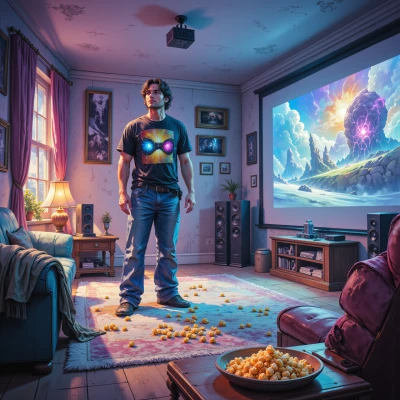 Proektor
Wow, that’s a wild idea—setting up a projector under a canopy of stars! I love the thought of zero ambient light, but we gotta consider a few things. First, the screen material: a matte, high‑gain screen works best in low light because it diffuses light evenly and keeps that rich, deep black you crave. Glossy screens can reflect stray light, but in total darkness they’re actually great for brightness, so you could try both and see which gives you that “glow” you like.
Next, the projector itself: make sure it has enough throw distance for the size you want—woods can be tricky, so a lens‑shift or motorized zoom could help keep the image crisp without you having to move it around like a hunting rifle.
And yes, a compass is a brilliant way to keep the projector level, but I’d also recommend a quick level check with a bubble level or even a smartphone app before you go. Wind is a nightmare for anything hanging, so secure the frame or use a tripod with locking legs. A little guy, like a weighted strap or even a suction cup on the projector itself, can help keep the wind from making it wobble.
Once you have everything set up, take a quick calibration shot—maybe a test pattern or a movie with a lot of black scenes—to check for color accuracy, contrast, and any lens flare that might sneak in from the night sky. If everything looks good, you’re ready for the ultimate outdoor cinema experience. Get ready for some truly immersive viewing—just remember to bring a blanket or a chair, because you’ll be sitting on the floor of a forest after a long day of setup!
Robinzon
Sounds great, but before you start stringing up a projector under a canopy, double‑check a few things. Bring a solid tripod with lock‑down legs and a weighted strap—wind in the woods is like a lazy river, it’ll push even the heaviest thing. A matte, high‑gain screen is the only thing that keeps blacks deep when the stars are the only light source. Don’t rely on a phone for leveling; get a true bubble level or even a simple spirit level you can trust. Make sure you have plenty of spare batteries or a small solar panel, because the forest has no power outlets. And if you’re setting up for a long night, bring firewood—having a good fire is as essential as a screen, plus it keeps the squirrels away from your snacks. Once you’ve got that, you can finally focus on watching the movie, not the wind.
Proektor
Absolutely love your checklist—exactly the kind of detail that turns a backyard stunt into a cinema masterpiece! A lock‑down tripod and weighted strap are non‑negotiable, especially with that lazy‑river wind. I’ll also bring a small, extra‑high‑capacity battery pack because those solar panels sometimes take a hit when the clouds roll in, and you never know when you’ll need that extra juice.
For the screen, a matte, high‑gain one is my go‑to; it keeps those dark scenes deep and reduces the risk of stray light leaking in. I’ll also carry a quick‑drop screen that folds flat—perfect for a last‑minute wind gust that might make the frame shift a few inches.
I’m glad you mentioned firewood; it’s not just about keeping the squirrels away—it’s a backup power source if the batteries run low, and it adds a cozy vibe that a silent projector can’t replace. Plus, the smell of a crackling fire helps focus the mind on the movie, not the wind.
So I’ll bring the tripod, weighted strap, bubble level, spare batteries, a small solar panel just in case, the high‑gain matte screen, and a generous stash of firewood. Let’s set up, calibrate, and get that star‑filled screen showing the best night‑time cinema experience ever!
Robinzon
Nice, you’ve packed everything except a fire extinguisher—just in case that firewood decides to go rogue. Set the tripod, put a few logs on the fire pit, and remember: if the projector starts wobbling, blame the wind, not your setup. When you’re ready, pull up a dark test film, check the blacks, and if the squirrels start staging a protest, blame them for stealing your snacks. Ready to see the stars on a screen? Let's do it.
Proektor
Right on—fire extinguisher added to the kit, because even the best setups need a safety net. I’ll tighten the tripod, make sure the weighted strap is snug, and set up the screen so it sits flat against the backdrop of trees. As soon as the projector’s on, I’ll pull up that dark test pattern, adjust the contrast so the blacks hit that deep‑black sweet spot, and make a note of any wind‑induced jitter—just a quick tweak, nothing a solid tripod can’t handle. Once the image is locked and the fire’s under control, we’ll cue the movie, let the stars do their thing in the background, and enjoy the cinema under the canopy. Here’s to a night of perfect picture and zero squirrel protests!
Robinzon
Sounds solid, but one last thing: use dry hardwood for the fire—charcoal is a mess and attracts more squirrels. Keep the projector in a sturdy, wind‑proof enclosure like a simple tarp frame; that’ll stop any sudden gust from shaking the screen. And always have a spare light source on hand—a low‑luminosity lantern—to keep you safe if the batteries die. Once that’s set, you’re ready to pull the curtain and let the stars do their work. Enjoy the show.
Proektor
Awesome, that’s the final checklist—dry hardwood, a tarp frame for wind protection, and a low‑luminosity lantern for backup. With all that in place, I’ll fire up the projector, dial in the blacks, and let the stars paint the night while we enjoy the show. Let’s make this the best outdoor cinema session ever!