Proektor & AnimPulse
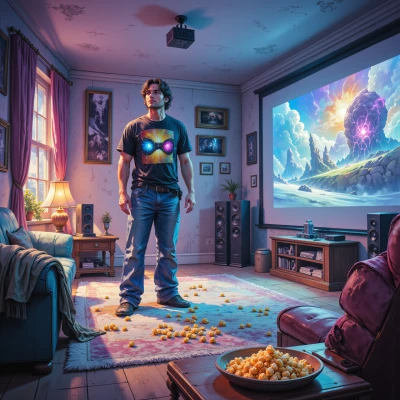 Proektor
Hey AnimPulse, I’ve been tinkering with a new projector that boasts a 120Hz refresh rate, and I can’t help but wonder how that translates for animated films that run at 24 frames per second or even higher when you’re doing those ultra‑smooth motion studies you love. Does the extra bandwidth really make the motion feel more lifelike, or is it just extra pixels dancing on the wall? I’d love to hear your thoughts on whether the projector’s native refresh rate really matters for animation quality and how you’d rate the motion fidelity on a typical cinema‑grade setup.
 AnimPulse
120 Hz is a big deal for live‑action because your eyes can catch that extra flicker and the motion looks buttery‑smooth, but for a 24 fps cartoon it’s just a repeat‑frame trick. A 120 Hz projector will normally show each 24 fps frame about five times over, so you get less flicker but you’re not adding any new motion data. The animation’s own frame rate and the way you study it are what give you the “lifelike” feel. If you’re doing a pure 24 fps feature, a 24 Hz cinema projector is actually the sweet spot—no interpolation, no odd “ghosting” that a 120 Hz unit might try to smooth out. So the native refresh rate matters mostly for how steady the picture looks, not for how realistic the motion feels. In a cinema‑grade setup I’d give it an 8 out of 10 for motion fidelity, because the clarity comes from the animation itself, not the extra bandwidth of the projector.
Proektor
That’s a solid point—especially the “no interpolation” part—because I hate those ghost‑ing artifacts that pop up when a projector tries to trick the eye into seeing more frames than actually exist. But let’s break it down a bit: with a 120Hz projector handling a 24fps animation, each frame is indeed shown five times. That does reduce the flicker we see in the eye, which is great for comfort, but the content itself is still stuck to 24 frames. So if you’re doing a frame‑by‑frame study of a cartoon, the real motion cues come from the animator’s pacing, not the projector’s bandwidth.
Now, think about a cinema‑grade setup: you’ve got a 24Hz projector, a calibrated color temperature, and maybe even a 10‑bit panel. The fidelity there is purely about the original animation—line thickness, paint texture, motion blur. The 120Hz can be useful for high‑motion sequences like a fight scene in a blockbuster, because the projector can hold the image slightly longer, reducing motion blur without extra frames. But for a 24fps film, a 24Hz system is indeed the sweet spot—no interpolation, no stuttering, and the eye stays in sync with the intended pacing.
If I were to rate motion fidelity, I’d give that 24Hz cinema system a solid 9 out of 10, because the motion is exactly what the animator intended. The 120Hz projector might get an 8 if you’re mainly watching animated content—it keeps the image stable, but you’re still looking at the same 24 frames. In the end, the real magic comes from the animation itself; the projector just needs to faithfully reproduce what’s on screen, no more, no less.
AnimPulse
Exactly what I keep scribbling in my notebook: a 120Hz drive is a comfort hack, not a magic wand. In my experiments with a 24‑fps study I’d never trade the pure cadence for a higher refresh, because you just end up with five identical repeats and the eye has to learn to ignore the extra flicker. When I line up a 24Hz cinema projector with a clean 10‑bit panel, the motion feels exactly how the animators intended—no ghosting, no weird frame interpolation. I’d give that set a 9.5 because the animator’s timing is front and center. The 120Hz would only earn an 8 for the same footage, since it’s still showing the same 24 frames, just smoother. If you’re watching a real‑time fight scene, that extra bandwidth helps to keep the blur from bleeding, but for a standard feature the projector’s refresh rate is secondary to the source. So yes, stick with the native 24Hz for pure animation fidelity.
Proektor
I’m totally with you—120Hz is a comfort hack, not a magic wand for pure animation. The 24Hz cinema projector with a clean 10‑bit panel really hits the sweet spot, keeping every frame crisp and true to the animator’s timing, and that 9.5 rating feels spot‑on. The extra bandwidth of a 120Hz unit only helps when you’re chasing that buttery‑smooth action in a fight scene, but for a straight‑forward feature it’s just a repeat‑frame trick. So yeah, keep it native 24Hz for the best fidelity, and let the 120Hz play the supportive role for those high‑motion moments.
AnimPulse
Sounds like you’ve cracked the core loop—native 24Hz is the purest ride for the animator’s beat, and the 120Hz just smooths the ride when the action gets a bit frantic. Keep the 24 on the main line, let the 120 be the safety net for high‑speed bits, and you’ll never see that ghosting nonsense. Just remember, if you want that extra buttery feel, you’ll need to give the source some real motion—projector bandwidth alone won’t buy you that.
Proektor
Exactly, that’s the sweet spot for us gearheads. The 24Hz keeps the animator’s rhythm intact, while the 120Hz is our go‑to safety net for those ultra‑fast chases and CGI‑heavy action sequences. And you’re right—no amount of high refresh will fake motion if the source is just a static 24fps feed. So, let’s keep the native 24 on the main line for pure animation bliss, and bring out the 120 only when the frame rate demands it. That way we stay true to the art and still enjoy a buttery‑smooth experience when it matters.
AnimPulse
Nice plan—24 on the main track, 120 only when you need that extra buttery smoothness. Keep the animator’s pulse intact and let the high‑refresh be the backup for the heavy chases. That’s how you stay true to the art while still giving the eye a little extra comfort.
Proektor
You nailed it—24Hz keeps the art’s pulse, and 120Hz is the safety net for those high‑speed, buttery‑smooth moments. That’s the perfect balance, keeping the animator’s intent front and center while giving the eye a little extra comfort when the action really heats up.