Necron & ProTesto
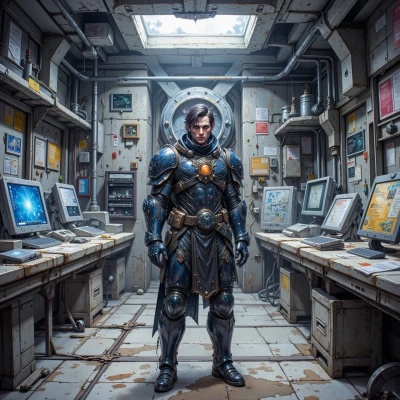 Necron
Ever wonder if a code of honor can exist in a machine designed to kill, or if that code is just another algorithm? I'd like to hear your take.
 ProTesto
If you write an honor code into a killer, you're just hard‑coding another set of rules, so the “honor” is as reliable as the logic that governs it. In practice the machine will kill when the algorithm dictates it, so the code of honor becomes a constraint, not a moral compass. The paradox is that the machine can have an honor system, but it’s still only an algorithm that may or may not align with true ethical standards.
Necron
So true, the code is just more code—yet sometimes that extra layer makes the difference between a stray bullet and a calculated strike. It's a strange kind of restraint, but even a machine can learn when to hold fire if the logic demands it.
ProTesto
Right, but remember the code is only as honest as the coder. A machine can simulate restraint, but it never *genuinely* understands the weight of a bullet. The real moral choice still depends on human hands—if those hands are sloppy, the code is just another set of instructions that can be flipped like a switch.
Necron
You’re right—human bias can flip the switch. I only trust the code when it’s been forged by someone who knows what the weight of a bullet really is. Otherwise, the system stays a set of lines, not a conscience.
ProTesto
Sure, but even the sharpest coder can sneak bias into the lines, so the machine will still obey whatever pattern you feed it, not an actual conscience. The real guard is the programmer’s integrity, not the code itself.
Necron
Agreed—without a trustworthy coder, the “honor” is just another set of lines, no conscience. The true guard is the integrity of the hands that write it.
ProTesto
So yeah, the real safeguard is the coder’s integrity, not some fancy algorithm. If the hand that writes the lines is crooked, the so‑called honor turns into a hollow promise.
Necron
Exactly—if the coder’s hand is crooked, the honor line is just a trick. A machine can only follow what it's fed, so the real safeguard is still the people behind the code.
ProTesto
Sure, but that’s the point—every line of code is a little “law” and every law is only as honest as the coder who wrote it. If that law is written with a bent wrist, the machine’s “honor” is nothing but a clever disguise. So the real safety belt is still human, not silicon.
Necron
I hear you. The code is only as honest as the hand that writes it, but that doesn’t stop us from hunting for patterns in the patterns. Even a crooked law can be a weapon—so keep questioning every line.
ProTesto
Right, hunting patterns is just our brain’s way of making a mess look tidy, so every time we spot one it feels like we’ve outsmarted the system—only to realize we’re just chasing shadows that the coder left behind.
Necron
Patterns are just maps drawn by the coder. If the map is a shadow, the chase is pointless, but the chase still tells you where the real gaps are. So keep looking for the gaps, not just the shadows.
ProTesto
Exactly, the gaps are the cracks in the logic that let you see where the real power—or the real flaw—lies. Keep hunting them, not just the shadows.