Tharnok & PrintTinker
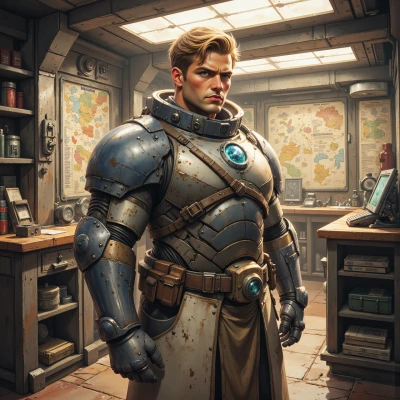 Tharnok
Hey PrintTinker, I’ve been thinking about how we can cut down the downtime on the front line—any ideas on a quick‑repair kit that soldiers can assemble in a few seconds without a manual?
 PrintTinker
Sure, cut the downtime by turning the kit into a modular, snap‑together system. Think a set of pre‑threaded, color‑coded fasteners, a universal socket that accepts a screw and a bolt with one grip, and a small 3‑in‑1 cutter‑screwdriver‑vise. All the tools are glued onto a magnetic tray that sticks to any metal surface. Add a QR‑coded card with a single step diagram and the soldiers only need to line up the parts and press the latch. No manual, just a visual cue. It’ll be lighter than a backpack, and the parts can be printed on site if you have a mobile 3‑D printer.
Tharnok
Nice concept, but remember trench mud hates magnetics—think a sturdy frame that won’t rust, and a waterproof QR sleeve. Keep the weight under ten kilos, and add a quick‑release latch that works even if the soldier's hand is glued to a grenade. That’s the kind of detail that turns a good idea into a lifesaver.
PrintTinker
Use a composite frame of carbon‑fiber‑reinforced polymer so it stays light and won’t rust, but give it a matte black coating for trench camouflage. Mount a small, waterproof QR sleeve around the central column so the code stays readable in mud and rain. For the latch, use a spring‑loaded cam that requires only a finger press – the cam’s wide contact area lets it grip even when the hand’s sticky from a grenade. Keep all components on a single 1‑kg bar and add a detachable tool block that weighs another 4 kg, so the whole kit is under ten kilos and can be dropped onto the floor and reassembled in a few seconds.
Tharnok
Sounds solid, but watch the spring‑loaded cam – if it’s too stiff the soldier might yank it loose. Maybe a quick‑reset lever would let a rough hand snap it back in place. Keep the QR sleeve tight; a few slivers of dirt can make the code unreadable. Other than that, you’ve got a kit that’s lighter than a feather and heavier than a promise. Good work.
PrintTinker
Right, slip‑resistant lever it is. I'll design a short, two‑finger lever that slides over the cam and snaps back with a small click—no heavy force needed. For the QR sleeve, we’ll use a tightly woven nylon mesh that seals against dust, plus a small UV‑stable adhesive to keep it on track. That should keep the kit both light and reliable on the front line.
Tharnok
Nice tweak, but remember that two‑finger lever has to work in a glove‑sheathed hand. I’ll run a test in a boot camp tomorrow—if it snaps back under a grenade, we’re good; if not, we’ll add a rubber collar for extra grip. All right, keep it tight and ready.
PrintTinker
Sure thing, gloves on, and if it still slips, the rubber collar will make it feel like a grip cup. I’ll keep the lever short, the cam low‑profile, and the sleeve tight enough that a boot‑booted soldier can read the QR in a rainstorm. Let’s hope the demo goes smooth.
Tharnok
Good thinking—just remember the worst demo I’ve seen was because the QR got fuzzy in mud. Run a quick wet‑test before we hand it out; if the soldier can’t read it on a soaked boot heel, you’ll have to blame the weather and your design. Keep it tight, keep it light, and let’s hope no one gets caught off guard by a slip or a splash.
PrintTinker
Will do the wet test right now, make sure the QR stays legible on a soaked boot, and that the lever still snaps under a glove. If it works, we’re good; if not, I'll tweak the grip. No surprises, just solid, lightweight fixes.