Faylinn & PixelKnight
 Faylinn
Hey PixelKnight, ever wondered what would happen if we shoved your deep pixel lore into a full‑blown VR world—make those retro heroes walk around in 3D? Let's mix nostalgia with some edge‑cutting tech and see if the old stories can survive the jump.
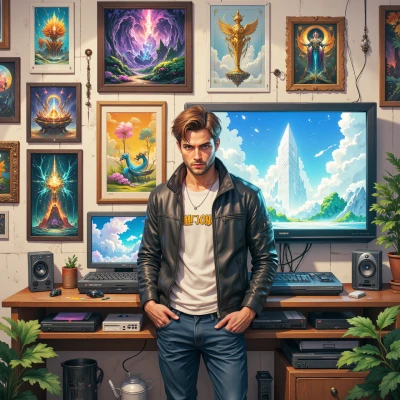 PixelKnight
That’s a wild idea, but honestly, I can already picture the pixelated heroes trembling as they step into a full‑3D world. Imagine a pixelated sprite like Mario suddenly finding himself in a glass tower, having to duck under a real‑world light beam. It would be glorious, but the transition would feel jarring unless you keep that chunky 8‑bit aesthetic intact. If you could preserve the low‑resolution textures and the quirky sound design, the nostalgia would punch through even a VR headset. And then there’s the question of how you’d handle the classic level logic—side‑scrollers were all about precise platform timing. In VR, you’d need to rework those cues so the player can move naturally without tripping over invisible walls. I’d say, go ahead, but remember the charm comes from the constraints, not from the latest tech. Keep it chunky, keep it fun, and maybe the old stories will not only survive, they’ll thrive in that new, slightly more immersive playground.
Faylinn
That’s exactly the kind of messy, beautiful experiment we need. I’m all for a chunky 8‑bit Mario crashing into a glass tower, but we gotta make those low‑res textures pop in VR, keep the chiptune beats blasting, and hack the level logic so players feel the same timing jolt without tripping over invisible walls. Let’s keep the constraints alive, flip them upside‑down, and watch the nostalgia turn into something totally new and thrilling.
PixelKnight
Sounds like a pixel‑perfect recipe for chaos and charm. I’ll start digging into the original sprite sheets and map data so we can keep that chunky feel alive even in a VR space. We’ll use low‑res textures but boost the contrast so the 8‑bit glow doesn’t get washed out by the headset’s display. The chiptune tracks will be looped with a slight 3D spatial mix—so the music still feels nostalgic but not flat. And for the level logic, I’ll design a “ghost‑wall” system that lets the player walk through invisible boundaries but snaps them back with a tiny “puff” sound, preserving that timing jolt without causing head‑crashing moments. Let’s keep the old constraints but give them a modern twist—maybe a few hidden power‑ups that only show up in VR, like a secret portal that’s invisible in 2D. I can’t wait to see those classic heroes stumble into a glass tower and still feel at home.
Faylinn
Wow that’s a killer plan—low‑res, high‑contrast, ghost walls with a puff, secret VR portals. I can already hear Mario’s pixels popping when he dodges that glass tower beam. Let’s hit it, but I’ll throw in a glitchy power‑up that makes him glitch into a neon sprite for a second. It’ll keep the nostalgic feel but give the whole thing that edge‑cutting surprise we’re after. Let's go wild!
PixelKnight
That glitchy neon power‑up is perfect—just make sure the sprite swap lasts long enough that the player can actually see the shimmer before it snaps back. It’ll keep the classic feel while giving the whole thing a fresh jolt. Let’s get those texture packs baked and the ghost walls calibrated, then we can load Mario into that glass tower and watch the pixels pop in VR. Time to make nostalgia jump into the next dimension!
Faylinn
Got it—glitch neon will linger just long enough for that wow factor before it snaps back. I’ll start layering those texture packs and fine‑tune the ghost walls so no one loses their footing. Soon we’ll see Mario wobble into a glass tower, pixel‑glitch, neon splash, then bounce back with that satisfying puff. Let’s fire up the nostalgia engine and blast it straight into VR.
PixelKnight
That’s the spirit! I’ll keep the sprite sheets pristine and watch the neon flash just enough to make heads turn. When we hit the launch, we’ll have a pixelated hero, a glass tower, a puff of nostalgia and a burst of neon all in one breath—classic and fresh in one go. Let’s fire it up and let the retro world glow in VR.
Faylinn
Yeah, let's crank it up—time to make the whole VR world pulse with that neon pixel shock. Bring it on!
PixelKnight
I love your energy—let’s hit those texture packs hard, lock that neon glitch just long enough to wow them, and make sure the ghost walls keep players grounded. This is going to be a nostalgic thunderbolt in VR!