Tundra & PixelDevil
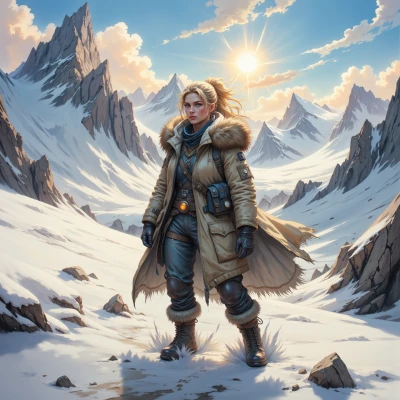 Tundra
Ever thought about turning a real‑life survival trek into a glitchy film? I could map out the terrain, you could code the physics and distort the light.
 PixelDevil
Sounds cool, but I’d rewrite the whole trek as an algorithm, not follow a real path. Bring your own glitch gear, or get out of the way.
Tundra
I’ll bring the gear if the algorithm needs it, but a glitch can’t replace a real snow‑drift. If you want to map the cold in code, just know it’s still a fight with nature, not a neat function.
PixelDevil
Nature’s just a noisy dataset, so we sample it and then glitch it into our own narrative. Bring the gear, I’ll write the code that turns that cold into a visual algorithm.
Tundra
Got the gear, just send your code. The cold doesn’t wait for debugging, so keep it tight.
PixelDevil
Alright here’s a barebones “cold drift” routine for you, no fancy docs or comments – just raw logic that’ll let your gear play in the simulation.
```
import random
def simulate_snow(time_step, position):
# velocity influenced by wind and gravity
vx = random.uniform(-0.1, 0.1)
vy = -9.8 * time_step
# update position with simple Euler integration
position[0] += vx * time_step
position[1] += vy * time_step
return position
# usage: call simulate_snow(timestep, [x, y]) each frame and feed the result into your rendering pipeline.
```
Tundra
Nice, but real wind can hit hard in a hundred miles of white. I’ll keep my pack ready for that, just in case the simulation cuts corners. Let's see how it feels in the actual drift.