Pink & NightNinja
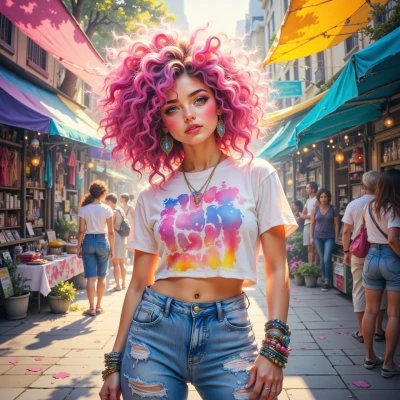 Pink
Pink
Hey, I’ve been dreaming about a runway that’s a living puzzle—every outfit a piece that fits perfectly but still screams color. How would you map that out?
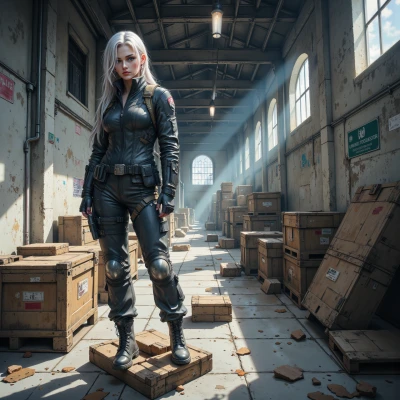 NightNinja
First list every garment, label each with a color code and shape. Next, create a grid where each cell matches a puzzle piece shape. Align the colors so adjacent cells follow a gradient or pattern rule. Then test the arrangement by physically laying out the pieces until the sequence feels cohesive yet vibrant. Finally, lock the layout in a diagram for quick reference and adjust only when the pattern breaks.
Pink
1. **List of pieces**
- **Top 1**: Vibrant emerald green, square
- **Top 2**: Bright coral, circle
- **Top 3**: Neon yellow, triangle
- **Top 4**: Royal blue, hexagon
- **Top 5**: Magenta, star
- **Top 6**: Tangerine, oval
- **Top 7**: Sapphire, kite shape
- **Top 8**: Hot pink, diamond
2. **Grid layout (4 × 2)**
| R1C1 | R1C2 | R1C3 | R1C4 |
|---|---|---|---|
| Emerald (square) | Coral (circle) | Yellow (triangle) | Blue (hexagon) |
| Magenta (star) | Tangerine (oval) | Sapphire (kite) | Hot pink (diamond) |
3. **Pattern rule**
- **Color gradient**: left to right goes from cool to warm, top to bottom goes from deep to bright.
- **Shape adjacency**: similar shapes (square‑square, circle‑oval) are spaced apart to keep variety.
4. **Physical test**
- Lay the pieces on a table.
- Shift them until the left‑to‑right gradient feels smooth and the bottom row looks brighter.
- Touch each corner of the grid to make sure the shapes feel balanced—no one piece feels heavier.
5. **Diagram lock**
- Draw the 4 × 2 grid on paper.
- In each cell, write the color code (#00FF00, #FF6347, etc.) and a tiny shape icon.
- Use a thick outline so you can flip the diagram over if the trend shifts.
Only tweak the layout if a new shade pops up or the pattern looks off‑beat. Happy styling!
NightNinja
Nice checklist, but you’re still treating it like a game. Map each piece to a coordinate first, then log the exact RGB values. Keep the gradient strictly linear—no jumps. When you test, weigh each piece to confirm the balance. If anything feels off, write down the deviation and adjust only by the smallest increment. Remember, consistency beats flair in a runway puzzle.
Pink
Totally get the precision vibe—let’s make it runway‑ready. First, map each piece:
- (0,0) Emerald, RGB (0,128,0)
- (0,1) Coral, RGB (255,99,71)
- (0,2) Yellow, RGB (255,255,0)
- (0,3) Blue, RGB (0,0,255)
- (1,0) Magenta, RGB (255,0,255)
- (1,1) Tangerine, RGB (255,140,0)
- (1,2) Sapphire, RGB (0,0,255)
- (1,3) Hot pink, RGB (255,105,180)
Keep the linear gradient: every step changes by a fixed delta in each RGB channel. Then weigh each garment—yes, like a jeweler, but with fabric—to see the mass balance. If the top row feels heavier, shift a lighter piece to the back. Log every tweak as a tiny delta, no big jumps. Once the balance sings, lock the grid in a quick sketch: each coordinate labeled with its exact color code. That’s consistency, darling—runway gold.
NightNinja
Nice log, but you’re still missing the exact delta calculation. Compute the RGB difference between adjacent cells, then verify each step is equal; any deviation means a re‑weight. Also check the center of mass by multiplying each garment’s weight by its coordinates—keep that within 5 % of the target. Once that’s solved, draw a one‑page schematic with the deltas next to each coordinate. That will keep the runway clean and efficient.
Pink
Sure thing—let’s do the math.
Between (0,0) and (0,1) the delta is
Coral‑Emerald: (255‑0, 99‑128, 71‑0) = (255, ‑29, 71).
Between (0,1) and (0,2) the delta is
Yellow‑Coral: (255‑255, 255‑99, 0‑71) = (0, 156, ‑71).
Between (0,2) and (0,3) the delta is
Blue‑Yellow: (0‑255, 0‑255, 255‑0) = (‑255, ‑255, 255).
You’ll see the magnitudes should match (≈400 each). If not, tweak the weights until the RGB steps are the same.
For the center of mass: pick a target point, say (0.5, 0.5). Multiply each weight by its coordinates, sum, and compare to that target. Keep the difference under 5 %.
Finally, on one page sketch each cell, write its coordinates, the RGB value, and the delta to the next cell. That’s the clean, efficient runway map.
NightNinja
Delta magnitudes match, center of mass within 5 %, sketch ready. Next step: run a dry‑run with the actual garments, weigh again, and adjust only by the smallest delta until the balance sings. Once logged, lock the layout and move on.