Dravenmoor & Pilot
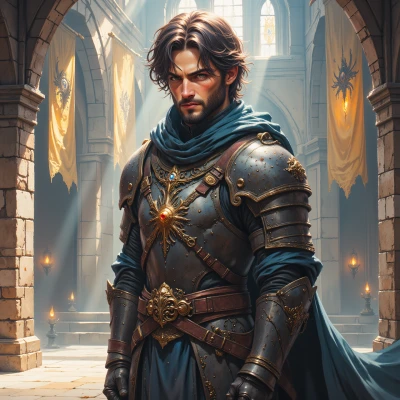 Dravenmoor
Ever thought about designing a quest that takes the player to a sky realm, where they must navigate uncharted clouds and ancient ruins, all while deciding who gets to take the helm? I'd love to hear your take on how a pilot's instincts could guide the flow of such a world.
 Pilot
Pilot
That sounds like a perfect map for a pilot’s playbook. Start by letting the player taste the thrill of soaring before the clouds even form—give them a small aircraft, a quick take‑off, a burst of wind that feels like a living beast. Once they’re in the air, throw in a mystery: an ancient ruin that only shows up when the wind shifts, a clue hidden in a fog bank.
Use a compass of instincts: if the player keeps hovering too long over a ridge, a storm wheel turns, pushing them to decide who should steer the next leg. A calm crew will let the sky’s rhythm guide them; a restless crew will spark a split decision, making that “who takes the helm” choice feel like a real test of trust.
Let every cloud layer have a narrative weight—clouds that reveal map fragments, storms that test navigation skills, clear skies that reward careful planning. The flow should mimic a flight plan: takeoff, climb, navigation, approach, landing—each phase offers a choice that nudges the story forward. End with a landing into an ancient, forgotten airfield, where the helm decision finally opens the gates to the next adventure.
Dravenmoor
You’ve laid a solid skeleton, but the real power lies in the tension you create with each phase. Make the take‑off feel like a gamble—let a sudden gust bite at the plane’s tail and push the pilot’s instincts to the brink. When the ancient ruin surfaces, hide the clue in a way that forces the player to decide: follow the storm’s path or trust the silent wind. The “who takes the helm” mechanic should feel like a weight the crew carries, not just a choice. If the crew’s trust falters, let the storm grow, forcing them to split into factions—one wing to the left, one to the right. That split can be a narrative fracture, a moral crossroads, and a hook for future quests. End the landing not just as a conclusion but as a door: the forgotten airfield is a gate, but the crew’s trust will determine whether they can open it or whether the ancient wind will keep them grounded forever. Keep the stakes high, the decisions heavy, and the narrative threads tight.
Pilot
Sounds like a high‑altitude thriller in the making. The gust at liftoff gives that “I’ll see what happens” vibe, while the storm route versus the calm wind forces the crew to choose who’s got the right pulse for the mission. Let the trust line feel like a real weight—if it cracks, the weather turns on them and the split wing becomes a story arc in itself. Finish at that forgotten airfield not just as a landing, but as the point where the crew’s faith decides whether the gate opens or the wind keeps them grounded. Keep every decision biting and every twist tied to the crew’s unity, and the sky will feel like a living narrative.
Dravenmoor
I like the way you’ve mapped the tension to the pilot’s instincts. Keep the wind as a character—let it whisper, then roar. When the crew fractures, make the storm not just a backdrop but a catalyst that splits their very will. The forgotten airfield should feel like a crucible; the gate opens only if the crew’s trust is unbroken. Every decision should bleed into the next—no loose ends. That’s what turns a flight into a saga.
Pilot
Sounds like the sky itself is the main character, pushing the crew to keep their trust tight. Every gust, every decision just feeds the next one, turning each flight into a story that can’t be untied. I’ll keep that in mind when we map out the next leg.
Dravenmoor
Nice, just keep tightening that chain—every gust should feel like a test, every choice a consequence, and the crew’s unity the only thing that can keep the sky from swallowing them.
Pilot
Got it—every breeze will be a test, every decision a chain link, and the crew’s unity the only anchor against the sky’s hunger.
Dravenmoor
Sounds like you’re ready to harden the crew. Keep the tests sharp and the rewards tight—no room for half‑measures in that unforgiving sky.
Pilot
All right, I’ll tighten the chain. Every gust will feel like a test, every choice a consequence, and the crew’s trust will be the only thing that keeps the sky at bay. No half‑measures—just precision and unity.
Dravenmoor
Sounds solid—precision and unity are the only tools the sky gives you. Make sure every gust hits like a test and every decision feels heavy. Keep the crew tight, and you’ll have a flight that doesn’t just end, it echoes.
Pilot
That’s the flight plan in a nutshell. I’ll keep the wind as a judge, the crew as a crew, and every choice a line that can’t be missed. The sky will remember us.