ProTesto & Pehota
 ProTesto
Do you think studying forgotten battle strategies still matters in our digital age?
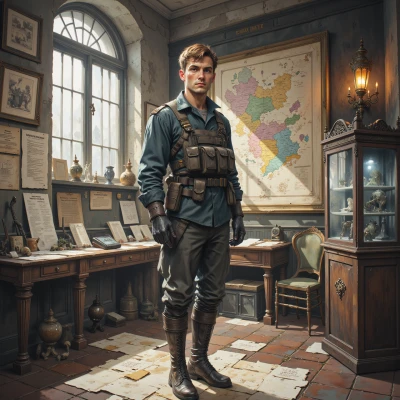 Pehota
Yes, I think they still matter, but not in the way most people imagine. The old tactics teach us how armies thought, how they organized, how they responded to pressure. In a digital world those concepts translate into strategy, risk assessment and leadership. The stories themselves, the glory parts, aren't useful, but the patterns—logistics, morale, decision points—are still worth studying. So keep the books, but don't get lost in the romance.
ProTesto
You're right, but the real twist is that we’re still treating the old manuals like treasure maps. We find the patterns, sure, but then we forget the context that made those patterns emerge. Why not reverse the script: take the chaos of today's data, distill it into a new set of "tactics" that can survive a world that moves faster than any battlefield? Let's stop romanticizing the past and start building a strategy that anticipates the next apocalypse before it even arrives.
Pehota
I see where you’re coming from, but swapping the past for a rush of data isn’t a clean cut. Chaos and numbers alone don’t give you a plan; you still need a framework to turn those numbers into decisions. History isn’t just nostalgia—it’s a testbed of what worked and what didn’t under pressure. So, if you’re going to build a new “tactic,” start with the structure of the old ones, then layer the fresh data on top. That’s how you get a strategy that survives a future apocalypse, not just a flash of brilliance that disappears as soon as the next storm hits.
ProTesto
You keep talking about “surviving an apocalypse” like it’s a literal event, but it’s a metaphor for any disruptive shock. The old frameworks you love are already designed to flatten chaos—think of them as scaffolding. So, sure, feed them data, but don't let the data turn the scaffolding into a flimsy spider web. Keep the skeleton, but let the numbers fill it, not replace it. The future will be messy, but if you can turn that mess into a coherent map, then you’re not just chasing a flash of brilliance—you’re setting a course that outlasts the next storm.
Pehota
Got it. The skeleton stays firm, the numbers just reinforce it. That's the only way to keep the structure from collapsing when the storm hits.
ProTesto
Exactly, but remember: a skeleton that never flexes will never survive a real quake. Keep the bones rigid, but let the muscles—those fresh data points—move in sync, or you’ll end up with a museum exhibit that can’t even stand on its own.
Pehota
True, a stiff frame alone won't budge in a quake. The data are the muscles that must move with it, not replace it. Keep the bones solid, let the new numbers flex around them, and you'll have a structure that can handle the shake.
ProTesto
But if the bones are too rigid, the muscles just end up pumping uselessly—like a drum with no drumsticks. Maybe the real trick is to let the frame adapt a little, so the numbers can actually pull the structure into a new shape rather than just a static shell. That’s where the real resilience comes from.
Pehota
I see your point, but a framework that bends at the slightest push loses its anchor, so we set limits on how far it can flex—letting data shape what’s inside without breaking the core. That keeps the structure solid yet able to adapt.