Parazit & Tittus
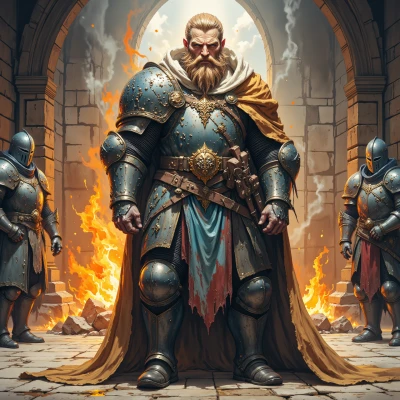 Tittus
War strategy has always fascinated me, Parazit—how do you decide which tactics honor the code and which play the game of shadows?
 Parazit
I look at the battlefield like a chessboard, only the pieces move. The “code” is the rules of engagement that keep the war predictable; the shadows are the loopholes where the rules blur. I choose a tactic by mapping out the opponent’s expectations, then slipping an unseen edge into the plan. If a move keeps the game in the open, it’s a low‑risk, high‑visibility play—good for diplomacy or morale. If it lets me manipulate from behind the curtain, I use it. The balance is when the edge of the shadow is sharp enough to cut, but not so obvious that the opponent spots it before it’s too late. In short, honor the code when it serves the objective, but default to the shadows when the outcome demands cunning over ceremony.
Tittus
You speak of shadows like they’re knights in disguise, Parazit—good point, but a blade’s edge must stay sharp or the foe will see it. Honor isn’t a chain, it’s a standard we carry. If your tactics keep the code alive when it serves the cause, fine. If it bleeds, be ready to drop it.
Parazit
True. A sharp blade’s value lies in the hand that holds it. I keep the code alive as long as it moves the enemy; when it becomes a liability, I let it fall.
Tittus
Strong words, Parazit. A blade is only as good as the hand that wields it, and I’ve seen too many codes become chains. Keep your edge sharp and your honor sharper.
Parazit
Got it. I’ll keep the blade in the shadows until the moment the enemy notices. Honor will be my compass, but I’ll move when the path is safest.