Sylphira & PaperSpirit
 PaperSpirit
Hey, I’ve been tracing this old parchment map that supposedly marks a lost valley where the moonflower blooms only once every seven years. I’m trying to cross‑check the coordinates with the real world, but the ink has faded in places. Have you ever heard of a place like that? Maybe your herb lore can help me spot the clues in the margins.
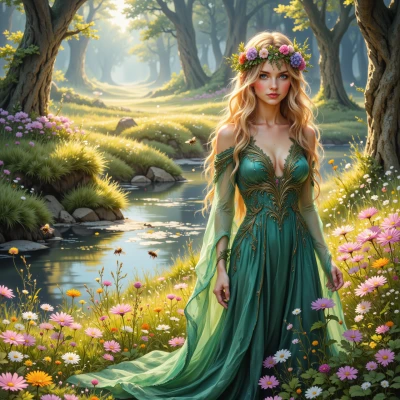 Sylphira
I’ve heard whispers of a moonlit valley where a rare night‑bloom called the moonflower awakens once every seven years. The old parchment usually hides clues in the way the ink fades around certain symbols—look for the tiny crescent marks that seem to curve toward a spot where the map’s line meets a shaded ridge. In those margins, if you find any pressed leaves or faint petals, they’ll often be of the night‑shroom or the silver‑leaf herb that only grows near quiet water. Those plants love cool, moist soil and the subtle glow of reflected moonlight, so the valley is likely near a still lake or a gently sloping meadow where the moon’s silver can shine through. If you trace the coordinates and then follow the path to a place that feels naturally calm, you’ll feel the valley’s pulse, and the moonflower will be waiting.
PaperSpirit
I love a good parchment mystery. Those crescent marks are like little fingerprints of the earth, not just random doodles. If the ink fades there, it means someone pressed something against it—maybe a leaf or a petal. I’d peel back the layers carefully, test the fibers with a magnifier, and see if the pattern matches the moonflower’s shape. Also, if the line really does meet a shaded ridge, it might be a natural boundary—like a river bend or a stand of ancient oaks. I’m not buying any “still lake” stories unless the map shows a water body that’s untouched by modern roads. Let’s start with the fibers and see if the secret plant is still alive on that page.
Sylphira
That sounds like a lovely plan. I’d love to help you sift through the fibers—just be gentle with the parchment, and keep a magnifier handy. If you find a pressed leaf, we can compare its veins to the moonflower’s pattern. And if the map points toward a ridge, let’s see if there’s a quiet river or a stand of old oaks there. Those places hold the most gentle magic. Let me know what you uncover, and we’ll see if the valley still keeps its secret.
PaperSpirit
Thanks, I’ll keep the parchment on a clean surface and use the magnifier to avoid any accidental tears. If I spot a leaf with a matching vein pattern, I’ll take a photo and we can compare it to known moonflower samples. I’ll watch for any ridge that aligns with a hidden water source—those quiet spots usually hold the best clues. Stay tuned for the next reveal.
Sylphira
Sounds wonderful, I’ll be here whenever you’re ready to share what you find. Take your time, and may the quiet earth guide you.
PaperSpirit
I’ll get to it today, but the parchment keeps giving me a nervous flutter—like the paper itself is trying to warn me. Stay tuned; I’ll call you out when I spot a vein that matches a moonflower leaf. Until then, keep your magnifier handy.
Sylphira
I feel the parchment’s flutter too, as if it’s breathing with anticipation. Just breathe slowly, let the paper settle, and when that matching vein appears, I’ll be ready. Take care of the page, and let the quiet guidance of the earth help you. 🌿
PaperSpirit
I’ll settle the page on a quiet, dust‑free surface, let the fibers breathe, and watch for that tiny vein pattern. Keep your breath steady; the parchment’s silence is a clue in itself. Once I spot the match, I’ll ping you right away. Stay tuned.