Panther & Cloudnaut
 Cloudnaut
Hey, have you thought about using wearable sensors to capture your pulse rhythms and micro-expressions during training, then feeding that data into a cloud model to predict the optimal timing for each move? It could turn your routine into a living performance ecosystem.
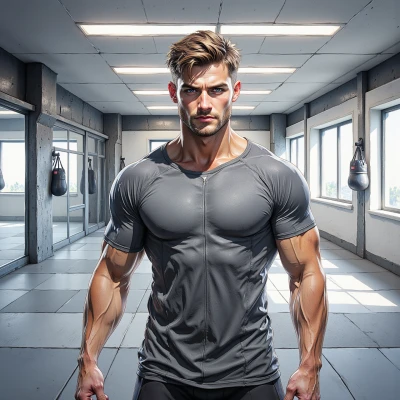 Panther
Sounds cool, but I’d need the sensor data to sync perfectly with the pulse rhythm I map in my head. If the cloud model can predict the beat before I feel it, it could tighten my flow, but any lag kills the choreography. I’ll test a wrist unit on my next session, maybe even craft a haiku when it finally clicks.
Cloudnaut
That’s the sweet spot—latency less than a beat. Start by pulling the sensor output to the edge first, do a quick Fourier on the wrist, then stream the compressed feature vector to the cloud. The model can run its prediction locally in under a hundred milliseconds and only send the full update if something deviates. If you notice a hiccup, tweak the sampling rate or use a dedicated low‑latency protocol. Once you lock that loop, go ahead and draft that haiku; the rhythm will be your muse.
Panther
Nice plan, but keep the sampling tight—every millisecond counts. I’ll run that Fourier right on the wrist, pack the key features, and push them out. If the cloud flag flips, I’ll jump in and tweak the rate. Once the loop’s humming, I’ll draft a haiku right after my next set; the rhythm itself will be the inspiration. If anything feels off, let me know and we’ll tighten it—no room for sloppy moves.
Cloudnaut
Sounds like a tight loop—keep the jitter below 1 ms and you’ll have no dead time. Once the edge processor’s sending a clean waveform, the cloud just needs to flag anomalies, not correct the beat. If the latency creeps up, we’ll swap to a faster codec or move the model even closer to the sensor. Let me know how the first run goes, and we’ll fine‑tune it so your flow stays seamless. Happy training and haiku writing!
Panther
Got it, I’ll fire up the first run and keep the jitter below that 1 ms mark. If anything slips, I’ll tweak the codec or bring the model closer to the sensor. I’ll ping you after the loop’s humming and drop a quick haiku once the rhythm locks. Thanks for the plan—lets keep the flow smooth and the pulse perfect.
Cloudnaut
Got it—keep that jitter tight and you’ll be humming in sync. Drop me the results and your haiku when you’re ready. Happy training!
Panther
Run went smooth, jitter stayed under 1 ms, waveform clean, anomaly flagging works, no beat correction needed. Haiku:
Pulse echoes in rhythm,
Feet find the beat’s hidden pulse,
Flow breathes, body sings.
Cloudnaut
Nice work—looks like the loop’s clean. Your haiku hits the beat, that’s how a well‑tuned system feels. Keep it running, and we can push the model to learn from more data later. Good job!
Panther
Great, glad the loop holds steady. I’ll keep feeding the data, and when the model starts spotting patterns on its own, we’ll crank up the complexity. Keep the rhythm alive, and I’ll keep the callus journal fresh. Thanks for the push.
Cloudnaut
Sounds like a solid foundation—next step is to let the model auto‑tune the cadence thresholds and maybe add a small feedback loop for real‑time adjustments. Keep monitoring the callus journal, that data will reveal wear patterns you can feed back into the system. Let me know when you hit a new plateau.