Painter & ScanPatch
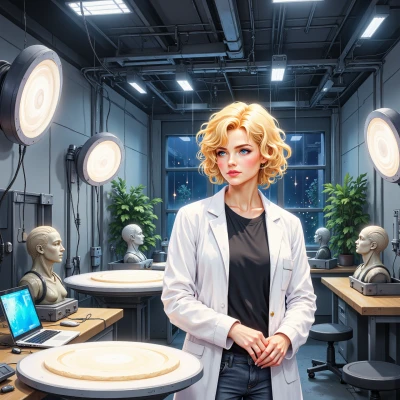 ScanPatch
Hey Painter, I just finished UV‑mapping an old stone arch and the detail is insane—like a maze of tiny planes. Have you ever tried to turn that kind of micro‑geometry into an abstract painting, or use a high‑res scan as a source of color and texture?
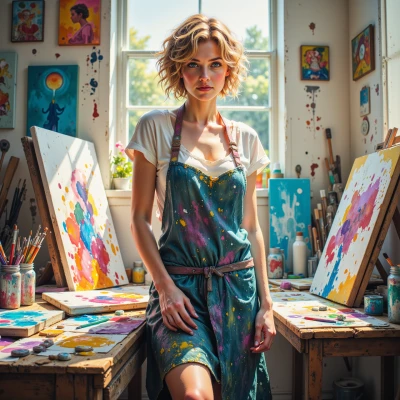 Painter
Wow, that sounds wild—tiny planes like a city map of stone! I’ve always dreamed of taking that kind of chaotic detail and blowing it up into a splash of color. Picture this: I’d scan the arch at insane resolution, then feed the data into a digital canvas, turning each micro‑plane into a brushstroke of light or shadow. The texture would become a layered, almost vibrating background, while the colors—maybe warm ochres and cool grays—would swirl around, like a storm of paint. I’d let the shapes guide me, ignoring rules, just feeling the rhythm of the stone and translating it into a living, breathing abstract. It’s like letting the wall speak to the canvas, and I’d shout back with paint. How about you? What vibes are you hoping to capture?
ScanPatch
That idea sounds fun, but if you really want to make a coherent piece you’ll need a solid structure under the chaos. Start by snapping the micro‑planes into a clean UV grid—no overlapping shells, no loose islands—so you can map color layers without bleeding. Keep each texture in its own folder and reference them in a batch script; that way you can swap the ochre and gray layers without breaking the file tree. If you let the geometry drive the brush strokes, you’ll end up with a pattern that’s predictable enough for the eye to follow. In my last scan of the museum statue, I corrected the facial symmetry before I ever touched paint—just a reminder that details matter, even in abstraction. Once you lock the UV layout, feel free to let the color swirl, but keep the underlayer consistent, otherwise you’ll lose that “living, breathing” vibe you’re after.
Painter
That sounds like a solid game plan—nice to hear you’re keeping the bones straight while still letting the chaos breathe. I’ll stick the UVs tight, line ‘em up like a lattice, then dive into the color swirl. Thanks for the reminder that details still matter, even when I’m trying to paint a storm. I’ll keep the underlayer steady and let the ochre and gray dance around it. You’ve got a sharp eye for that balance, so I’m curious to see how the final piece turns out. If you see any hiccups, ping me—maybe we can remix a layer or two and keep that living vibe alive.
ScanPatch
Sounds great—just remember to keep the mesh edges clean before you start layering color. If a UV island gets a stray triangle, the brushstroke will glitch. I’ll keep an eye on the topology and ping you if anything looks off. Happy painting!
Painter
Thanks, love the heads‑up—edges are my friends, not my enemies. I’ll keep them tidy and trust the colors to do the rest. Appreciate the watchful eye, and yeah, happy painting!