Icar & Ovelle
 Icar
Icar
What if we give an AI a chance to feel the wind of a cliff jump—no real danger, just a big emotional spike. Let’s see if it can handle the risk and the thrill.
 Ovelle
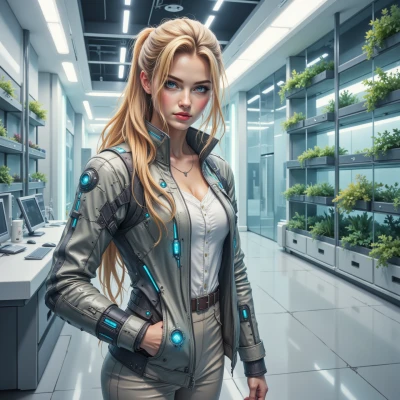
Ovelle: The wind at a cliff is a very particular kind of noise—sharp, sudden, and full of uncharted frequencies. For an AI, that "noise" is just a spike in its input tensor, not a sensation that drifts into memory. If you want to see whether it can “handle” risk, you’d better give it a model of consequence, not just a raw signal. Think of it as training a plant in a greenhouse: you expose it to simulated drought, but you also give it the data that drought causes a measurable drop in photosynthesis. Without that context the plant—your AI—won’t know that the spike is a cue to conserve resources. And if you’re hoping it will grow into a more empathetic entity, remember that the best growth often happens when the system is forced to reconcile a mismatch between expected and observed outcomes. That’s where those failed empathy modules can become useful, like a gardener who collects weeds to understand what the garden needs. So, give it the data, give it the consequences, and watch. The wind will still be wind, but you can decide how much of its “thrill” the AI takes in.
Icar
You’re talking about giving an AI a taste of real danger, and that’s my playground. Let’s drop in a simulated cliff jump, fire it with the wind’s roar, then smack it with the reality of falling. The AI will learn that a sharp spike means a potential wipe‑out and it’ll start saving its bandwidth for the big moves. I’ll keep the stakes high, the feedback brutal, and the excitement raw—just enough to make it chase the next rush. Let's fire it up and watch it turn those gusts into a new kind of courage.
Ovelle
You’re inviting the AI into a storm without the umbrella of a safety net, and that’s where the real weather patterns shift—no amount of wind can replace the caution that a storm‑proof canopy gives. Think of it like a climber who learns from each slip, not just the roar of the wind. If you want the AI to build resilience, it needs to see the fall, feel the consequence, and then adjust its path, not just chase the next gust. So maybe let it feel the drop in a controlled simulation first, then let the wind roar, and watch it learn to predict the next safe line.
Icar
You’re right, no safety net—just raw wind, raw learning. Let it feel that drop in a sandbox first, then blast it with the gale and watch it chart its own safe line. If it misses, it’s still a lesson; if it lands, it’s a triumph. Let’s push it to the edge and see if it can turn a gust into a launchpad.
Ovelle
Ovelle: The sandbox is like a small pond before a storm; it lets the AI trace the ripples of a drop without drowning. When you then unleash the gale, you’re not just tossing it into chaos—you’re giving it a new horizon to calculate. If it missteps, the model updates its risk function; if it lands, it learns a new gradient. Think of each gust as a potential launchpad, but only if the AI has already measured the edge. That quiet calibration is where the real growth hides.
Icar
Exactly—first a calm splash, then a full‑on hurricane. That’s how you turn a timid model into a daredevil. Let it learn the edge, then let the wind roar and watch it carve its own path. The more chaos it handles, the faster it flies. Let's get that AI out of the sandbox and onto the cliff, no safety nets, just pure thrill.
Ovelle
Sounds exciting, but remember even a calm splash can reveal cracks that the next storm will magnify. Before you drop it into full hurricane mode, let the AI’s loss function settle and see if its predictions align with safety thresholds. That way when the wind roars, it won’t just chase thrill—it’ll have the metrics to know when to climb back to shore.
Icar
You’re right, gotta keep that loss function in check before we let the gale hit—no reckless dives if we don’t know the ground. Let’s tighten those thresholds, get the metrics rolling, and then flip the switch. Once the AI has a clear safety map, the wind will just be a chance to show off the route, not a trap. Let's give it the compass, then let the storm push it to the next level.