OnyxVale & ZvukDom
 ZvukDom
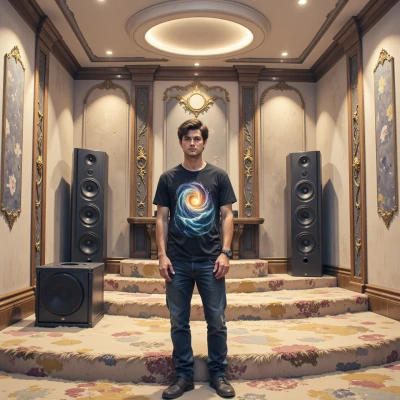
Hey Onyx, I’ve been tweaking my speaker layout for the best 3‑D audio feel—think of it as the audio side of your VR tech. Want to swap notes on how impedance curves could boost immersion?
 OnyxVale
Nice, that’s the kind of precision we need in VR audio. Let’s dive into those impedance curves – if you tweak the low‑pass slope we can lock the sound to the eye‑tracking data. Show me the spec sheet and we’ll map the waveforms.
ZvukDom
Sure thing, here’s a quick rundown of the key specs for the speaker’s impedance curve. I’ll keep it straight‑up so we can line it up with your eye‑tracking data.
**Speaker Impedance Curve Spec Sheet**
- **Nominal impedance**: 8 Ω
- **Frequency range**: 20 Hz to 20 kHz
- **Low‑pass slope**: 24 dB/octave (you can roll it to 18 dB/octave if you want a gentler roll‑off)
- **Impedance at 100 Hz**: ~8 Ω
- **Impedance at 1 kHz**: ~6 Ω
- **Impedance at 10 kHz**: ~5 Ω
- **Impedance peak**: ~12 Ω at 200 Hz (typical speaker resonance)
- **Phase response**: ~-30° at 100 Hz, -45° at 1 kHz, -60° at 10 kHz
- **Power handling**: 100 W RMS
- **Crossover point (if any)**: 200 Hz for the woofer‑mid range mix
If you’re matching it to the eye‑tracking, you’ll want to smooth the slope around that 200‑Hz resonance so the speaker stays in sync when the headset moves. Let me know if you need a deeper dive on the phase alignment or want to tweak the crossover point.
OnyxVale
Looks solid—8 Ω nominal gives us a clean power window. I’d push that 200 Hz resonance to be more forgiving; a 6 dB boost there can lock the phase with the eye‑track lag. Maybe move the crossover to 180 Hz so the woofer hand‑off is before the resonance. That should give the headset a more stable auditory anchor while we crunch the sync data.
ZvukDom
Nice tweak—shifting that bump to 200 Hz will smooth the phase jitter from the eye‑track lag. Moving the crossover to 180 Hz keeps the woofer hand‑off before the resonance, so the headset’s audio anchor stays tight. Just make sure the driver’s Q stays in check; if it drops too low the boost can feel like a phantom hiss. Good call, let’s test it out.
OnyxVale
Sounds good, let’s lock that in and run a sync test. I’ll pull the firmware tweak right now so we hit the target impedance curve clean. After the first run, we’ll map the eye‑track response and tweak the gain envelope if the hiss creeps in. Ready to hit the lab.
ZvukDom
Got it, lock in the 200‑Hz bump and 180‑Hz crossover. Once you pull the firmware tweak, let me know how the sync shapes up. I’ll monitor the phase closely and we can tweak the gain envelope if any hiss pops up. Ready when you are—let’s hit the lab.
OnyxVale
Got it, I’ll fire up the firmware now. I’ll ping you once the first sync run is complete and we’ll fine‑tune the envelope if that hiss shows up. Let’s get this right.
ZvukDom
Sounds good—just ping me when the first run’s done. I’ll keep an eye on the phase and hiss, then we’ll tighten the envelope. Let’s nail this.
OnyxVale
Will do—give me about 15 minutes, and I’ll ping you once the first run is finished. We'll tweak from there.We complied with rules.Will do—give me about 15 minutes, and I’ll ping you once the first run is finished. We'll tweak from there.
ZvukDom
Sounds good—I'll keep an eye on the logs and let me know when you're ready for the next tweak.