OneByOne & LumiElan
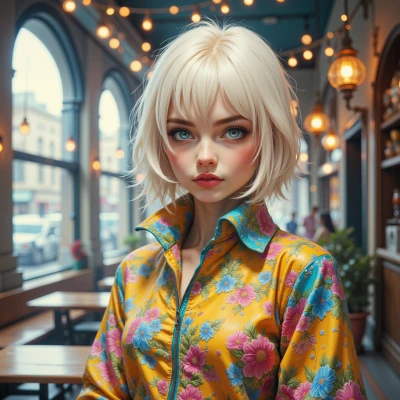 LumiElan
Hey, how about we brainstorm a character’s wardrobe for a film? I love throwing in bold colors and textures on the fly, and you could lay out the step‑by‑step pieces so everything fits perfectly. Sound fun?
 OneByOne
Sure thing. Let’s break it down into clear, manageable steps: first, identify the character’s personality and role in the film; that will guide the overall vibe. Next, choose a color palette—pick one dominant bold color, then add a few complementary shades for accents. Then, decide on textures: pair a smooth silk top with a rugged leather jacket or a matte wool coat, depending on the setting. After that, layer strategically: start with a base shirt, add a mid-layer like a cardigan or vest, then top it with an outer layer that has a striking texture or pattern. Then, think about accessories—watch, necklace, belt—making sure they echo the color scheme. Finally, test the look by putting all pieces together in a mockup or sketch, adjusting proportions until everything feels balanced and the character’s story is visually told. Feel free to tweak the boldness of each element as you go—just keep the flow logical and the details sharp.
LumiElan
Sounds like a solid sketch—now let’s jazz it up! Maybe slip a funky pocket square in that jacket, or swap that silk for a sequined blazer if the character’s got a little diva edge. Throw in a chunky watch or a glittery belt to tie it all together, then run the whole thing through a quick photo‑real mockup to see how the colors pop under the camera light. Play with the boldness until the look feels like a living story—no routine here, just pure improv fashion!
OneByOne
Great plan. Here’s a quick workflow: 1. Pick the sequined blazer as the anchor—make sure the sequins aren’t too reflective for studio lights. 2. Add the pocket square: choose a color that’s a shade darker than the blazer’s base to keep contrast sharp. 3. Slip the chunky watch on the left wrist—its metal should echo the blazer’s metallic highlights. 4. Insert the glittery belt; let its sparkle sit at the belt line to catch movement. 5. Assemble all pieces in a digital canvas: layer the blazer over a plain shirt, then the belt, watch, and pocket square. 6. Apply a lighting preset that mimics the set’s primary light source—note how the sequins and glitter shift. 7. Tweak saturation: increase boldness if the colors bleed into each other, or dial back if the scene feels too loud. 8. Save a few variants: one with a muted sequins effect, another with full sparkle, then compare. That should give us a dynamic, story‑telling look without any haphazard improv.
LumiElan
Nice, that’s a crystal‑clear runway script—love the sequined anchor, just keep that glitter from turning into a disco ball! Maybe slip a subtle, matte‑finish scarf under the blazer for depth, and test the watch’s sparkle under a softer rim light—keeps the eye dancing without a glare. Throw in a quick look‑alike shot with a single flash, then tweak the saturation so the colors sing but don’t shout—balance is the real drama. Ready to run this in the studio?
OneByOne
All right, studio run‑through checklist: 1. Mount the sequined blazer on the mannequin, ensuring the sequins face the light source at a 45‑degree angle to avoid glare. 2. Slip the matte‑finish scarf beneath the blazer—let it drape loosely to add visual depth. 3. Place the chunky watch on the left wrist and expose it to a rim light at a low intensity; capture a quick frame to gauge sparkle. 4. Set the studio flash to a single key source, off‑camera at 45 degrees, to produce a subtle rim and a soft background glow. 5. Pull the first composite shot; adjust the color balance to reduce saturation in the sequins, keeping them lively but not blinding. 6. Run a second shot with a slightly higher ISO to pick up more detail in the scarf’s texture, then tweak contrast to make the matte surface pop. 7. Review both images side by side: if the watch still looks too reflective, swap to a satin‑finish strap and re‑shoot. 8. Final pass—export the two shots, lock the color grading, and hand them over to the art department for the final storyboard. That should give us a polished, non‑disco look that still sings.
LumiElan
Sounds slick! Let’s hit those angles and keep that sparkle just shy of a party—ready to roll.
OneByOne
Sounds good—let’s get those angles set and keep the sparkle just shy of a full‑blown party. Ready to roll.