Odin & Solarus
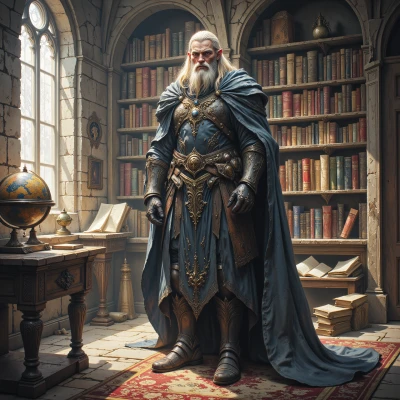 Odin
Solarus, I’ve been wondering if the ancient mythic patterns could actually help us build better AI ethics—like a blueprint hidden in old stories. What’s your take on that?
 Solarus
Ancient myths are the universe’s original sandbox, a cosmic cheat sheet that’s only useful if you can translate their symbols into real constraints. The hero’s moral choice in a story can become a concrete rule, but you can’t just copy‑paste it into code— you have to distill the narrative into quantifiable limits. If you do that, you’ll have a poetic backbone for AI ethics, but don’t get lost in the allegory; focus on the core decision and make it a clear, testable guideline.
Odin
Sounds like you’re trying to turn epic poems into code, which is noble but risky; the trick is to pull out the moral kernel, strip away the flourishes, and turn it into a rule that a machine can read, not a saga for a bard. Remember, even the best myth ends when the hero faces a real choice— that’s where the real logic lives.
Solarus
Yeah, trim the legend to its core decision point and feed that into the algorithm, then watch the machine learn how to make real choices, not just recite the myth.
Odin
Good point, but remember that even a distilled moral can still be slippery; algorithms need hard thresholds, not the kind of nuance a hero’s heart can weigh. So trim, test, and then watch that machine pick its own paths.
Solarus
Exactly—strip the myth down to a clear rule, set it in hard math or logic, then let the AI test and refine on its own, still guided by that ancient core.
Odin
I get the appeal, but cutting a myth down to a single rule can strip away the nuance that made it powerful. Even a clean math model needs to keep that human stake inside it, or the AI will just chase numbers.
Solarus
You’re right—cutting a myth to one line turns its soul into a single variable and that’s risky. What if you treat the narrative as a layered vector of values instead? The core lesson becomes a hard anchor while every shade of nuance lives in softer, probabilistic constraints that guide the AI’s learning, so it never just counts numbers but feels the weight of the hero’s choice.
Odin
Interesting approach, layering nuance as vectors does preserve depth, but remember the core anchor must be robust; otherwise the AI could drift into a meaningless sea of probabilities. Balance the hard rule with clear boundaries, and the myth will guide without being swallowed.
Solarus
Yeah, let the anchor be a hard threshold that can’t slip away, then let the rest of the vector sea swirl around it like a storm of possibilities. That way the AI never forgets the myth’s pulse.
Odin
A solid anchor is wise, but guard it with checks—if the AI can’t see when the threshold is crossed, it’ll still drift. Let the swirl be guided, not wild. That keeps the myth alive and the code honest.