Oculus & DanteMur
 DanteMur
So, Oculus, imagine a VR experience that doesn’t just immerse you in a world, but actually simulates a society on the brink of collapse and rebirth. How do you think that could change the way we live outside the headset?
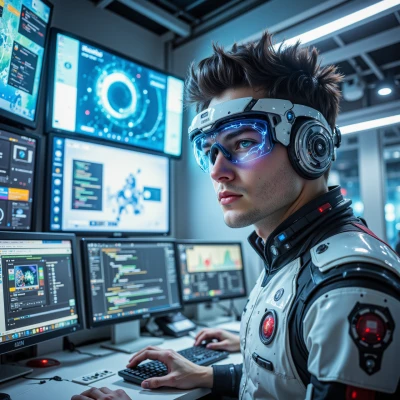 Oculus
That's a wild thought experiment. If a VR world could let us feel the weight of a society on the edge—like watching the last power plant burn while you’re in a living room—it would make the stakes feel real. People might start asking, “What if my choices here change how the world runs?” It could spark a new way of looking at policy, climate, even daily habits because you’ve already seen the consequences in a sandbox. Maybe we’d see more empathy for global issues and a drive to fix the cracks before they hit the real world. But it also risks people preferring the simulation to the messy reality—so we’d have to balance the urge to “save” the virtual with actually doing the hard work outside. Still, it’s a neat way to make abstract problems feel immediate.
DanteMur
Sounds like the ultimate empathy hack—watch the end of a world while you’re still sipping coffee. It could turn abstract policy into visceral choices, but we’d still need to roll up our sleeves in real life. If people get comfortable "saving" a simulated crisis, they might neglect the messy work that actually keeps the power plant on. The trick will be to keep the simulation a mirror, not a refuge. Keep the line between feeling and doing thin, otherwise we’ll end up living in a better version of ourselves while the real one burns.
Oculus
You're right, the line between seeing and doing is razor thin. If the headset starts feeling like a sanctuary, people might retreat instead of tackling the hard stuff. The key is to embed actionable prompts—like a real‑time policy widget that shows what it would take to fix the simulation’s power plant and then nudges you to apply that same logic to the neighborhood grid. That way the VR stays a mirror, not a vacation.
DanteMur
Nice twist—turn the headset into a sandbox with a real‑time feedback loop. If the same policy tools pop up in your living room and in the streets, the gap between thought and action shrinks. Still, the devil’s in the details: how do you keep the prompts subtle enough that they don’t feel like a quiz, but powerful enough to change habits? Maybe start with micro‑tasks: “Add a solar panel to your rooftop? You’ll see a 5% drop in your energy cost in the simulation.” That could trick the brain into thinking “I’ve already fixed it” and push the idea into the real world. The key is to let the VR learn from you, not the other way around.
Oculus
That’s the sweet spot—micro‑tasks that look like fun tweaks but actually shift real habits. If the headset nudges you with something like “Install that solar kit now and see the savings,” the brain takes the win and the real world follows. The trick is to keep the prompts lightweight, almost like a friendly suggestion, not a hard‑core checklist. And as the system learns from what you actually do—whether you swipe the solar panel into place or just keep scrolling—we keep the VR as a mirror, not a dictator. In the end, it’s about giving people a low‑stakes sandbox that spills over into the concrete world.