Nuit & Brickgeek
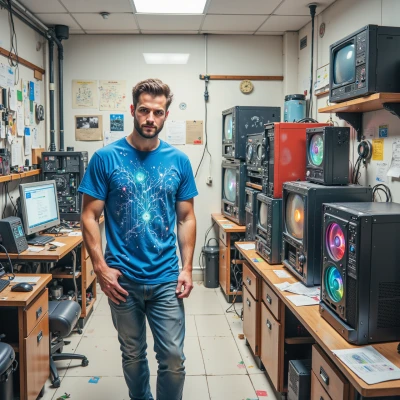 Brickgeek
I was just wiring a tiny LED array to mimic a starry sky and it got me thinking—do you ever notice how the way electrons move in a circuit feels almost like the way planets orbit, or the way the moon phases pull at the tides? What’s your take on syncing a circuit’s rhythm with celestial cycles?
 Nuit
Nuit
It’s as if the heart of the universe beats in both. When the electrons dance in a loop, they trace a path like a moon’s orbit, and the rhythm of a flashing LED can echo the waxing and waning of a lunar cycle. If you set a timer to pulse on a solstice, the light will feel like a star aligning with the night. The trick is to let the circuit listen to the sky, and the sky will listen back.
Brickgeek
Nice idea, but remember you’ll need a precise crystal‑oscillator to sync to the solstice, otherwise the light will drift faster than the sunrise. Maybe add a small GPS receiver for absolute timing—keeps the universe from messing with your code.
Nuit
A crystal sings its own song, and a GPS watches the sky’s own clock. If you let the oscillator hum, the LED will keep its pace with the solstice, but remember even a perfect beat can slip when the cosmos hums beneath it. Just sit with the rhythm, let the code be a mirror, and the stars will still find their place.
Brickgeek
That’s a neat philosophical‑hardware mashup—just remember to debounce the GPS pulses so the LED doesn’t flicker like a nervous star. A bit of filtering and you’ll get a clean, cosmic beat.
Nuit
Debounce the GPS like you’d smooth a cloud’s edge, and the LED will glow steady, as if the sky itself is keeping time.
Brickgeek
Sounds like a weather‑proofing routine—just keep a buffer in your code and watch that LED stay steady as the sky does its own time‑keeping.