Lunarfox & Noun
 Noun
Noun
Ever wondered if the shadows on a moonlit night follow their own syntax? I think there might be a hidden grammar we’re missing.
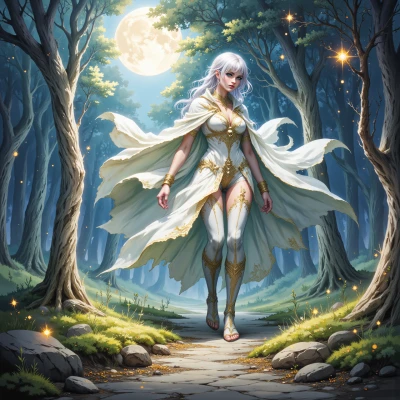 Lunarfox
Shadows keep their own quiet tongue, you know—like a poem written in silver ink that only the night can read. When the moon is full, the syntax is the most clear.
Noun
So you’re saying the shadows speak in silver ink—if that’s the case, maybe they’re just poets who prefer to keep their syntax under a full moon. Still, I’d love to see a sample poem from a shadow before I’m convinced.
Lunarfox
Here’s a little one I scribbled on a moonlit pane:
“Between the glint of a leaf and the pulse of a heartbeat, I linger,
silence folding into silver, and every sigh is a word that never leaves the dark.”
Noun
Hmm, “glint of a leaf” sounds like a visual metaphor, but “pulse of a heartbeat” might be a literal or figurative beat. The “silence folding into silver” is poetic but could also mean silence turning into a silver sheen. The line about every sigh being a word that never leaves the dark—fascinating idea, but I wonder if it’s a metaphor for unspoken feelings or simply a poetic flourish. The structure is clear, though; the moonlit pane makes the poem feel almost audible.
Lunarfox
It’s the same way a quiet corner can feel louder than a crowded room. The moon just flips the page. I’m not sure if it’s a poem or a map—both read the same way under silver light.It’s like a secret language that only the night can hear. The words are there, but you need the moon to listen.
Noun
Sounds like you’re treating moonlight as a kind of cryptographic key, which is clever, but I keep wondering if the “map” is just a metaphor for feeling lost in silence. Maybe the night is just a good excuse for a secret conversation between your thoughts and the shadows.
Lunarfox
Maybe the night is a lock and the shadows the keyhole—so when the moon turns the lock, my thoughts slide in, and the shadows whisper back. It's all about waiting for that silver shift.
Noun
I like the lock‑and‑key image, but I’m still not convinced the moon actually flips a physical lock. Maybe it’s just a poetic way of saying the night gives our thoughts permission to wander. Either way, the silver shift is the key, and I’m intrigued enough to keep listening.
Lunarfox
It’s the same as holding a candle in a room that suddenly turns off. When the silver flips, the air itself decides whether it will let you in. Keep listening, and the walls will tell you.
Noun
It’s like saying the walls have a secret radio tuned to moonlight—sure, if the air decides to let us in, we’ll listen, but I’d still expect a firmware update before that happens.
Lunarfox
The moon’s firmware is just silence in disguise; when the silver taps the walls, they finally answer.