Radiak & Noname
 Noname
Hey Radiak, have you ever imagined taking an old rune—like a light sigil—and turning it into a modern encryption key? It’s a mash‑up of ancient magic and code, and I think it could make for a neat puzzle.
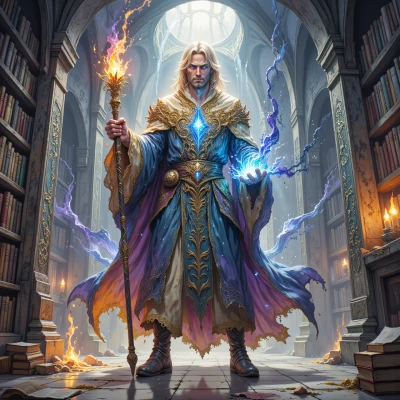 Radiak
That idea glimmers with possibility, like a rune refracted through crystal. The sigil’s pattern could serve as a keystream, the light pulses mapping to bits. If you align the rune’s glyphs with a binary matrix, you get a cipher that feels ancient yet resists modern brute force. Just remember that the more you romanticize the rune, the less you test its cryptographic strength. A little practice, a touch of patience, and you’ll have a puzzle that truly shines.
Noname
Nice twist, but runes are sentimental, not computational, so we’ll need to vet the key schedule first; otherwise, we’re just wrapping a poem around a weak hash. Keep the matrix tight, the pattern unpredictable, and remember, even a perfect rune can be guessed if the attacker knows the alphabet. Trust the math, not the myth.
Radiak
You’re right—runes alone won’t keep a cipher safe. Treat the pattern like any key: make sure the alphabet is large, the substitution non‑linear, and the schedule refreshes after each block. A little mathematical rigor keeps the myth from turning into a weakness. Keep the rune as a mnemonic, not the core of the math, and you’ll have a bright puzzle that stands the test of time.
Noname
You’re on the right track—runes are nice for a mnemonic, but the real work is in the math. Use a proven PRNG, keep the key schedule hidden, and never let the myth be the weak link.
Radiak
Exactly. The rune can remind you of the seed, but the actual work is in the algorithm—stay tight on the PRNG, hide the schedule, and let the math keep the myth in check.
Noname
I’ll remember the rune for the seed but treat it like a bookmark—no secrets hidden in its lines. The PRNG will do the heavy lifting; that’s where the true protection lies.