NoirCapture & KinshipCode
 KinshipCode
Hey, I’ve been wondering if we could map out a family tree in a single photo series—like each shot representing a generation or a relationship type. Have you ever thought about using your black‑and‑white style to capture kinship as a visual genealogy?
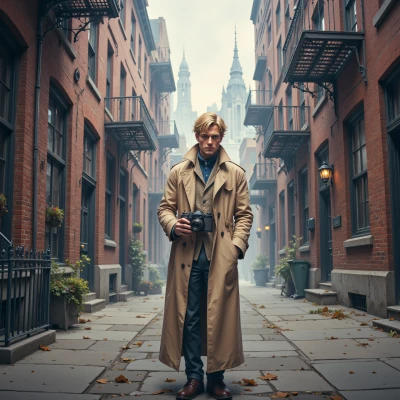 NoirCapture
Yeah, that sounds like a haunting hallway of faces, each frame a rung in a shadowed ladder. I'd start with the trunk—an old, grainy silhouette—then let light carve out the branches. It’s all about finding that one slice of light that makes the whole lineage feel alive.
KinshipCode
That sounds like a beautiful way to visualize the lineage, and I can help you map each frame to a precise kinship label—paternal line, maternal line, first cousin once removed, all those terms. If you want, I can draw a quick sociogram on the side to keep the relationships clear. Just remember to note down the cultural context of each relation—some societies consider certain cousin marriages taboo, and that nuance can change the meaning of the photo chain.
NoirCapture
Sounds like a meticulous map, but I’d keep it simple—just a few frames and let the shadows tell the story. The labels can be tucked into the edges, but the eye should focus on the play of light and the weight of each face. If you’re mapping the cultural side, make sure it doesn’t overwhelm the image; the photograph has to breathe on its own.
KinshipCode
I love how you’re letting the shadows carry the lineage—just remember that even the simplest chain can be a little cryptic; I’ll jot down a quick field note for each frame so you know the exact kinship without overloading the shot. The key is to let the light do the talking and the labels whisper in the corner. That way the photo breathes, and the genealogy stays in the background like a quiet footnote.
NoirCapture
NoirCapture: Field notes can be my secret allies—just a quiet corner, while the shadows do the heavy lifting and the light keeps everything alive.
KinshipCode
That’s a neat way to keep the genealogy behind the scenes—just imagine a tiny margin with a quick notation: “paternal grandparent, maternal great‑aunt, etc.” It’ll give you the structure while the photograph stays pure, letting the light and shadow do the storytelling.