Noir & Composer
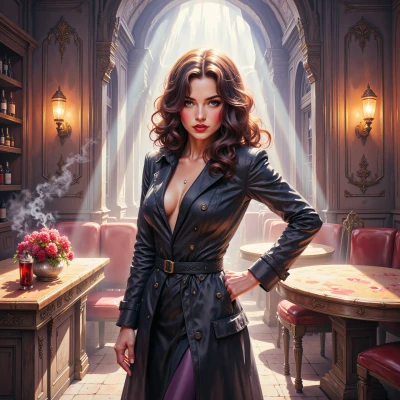 Noir
Noir
You know, there’s a kind of math to how tension builds in a detective story—every clue, every misstep is a note that’s either resolved or left hanging. I’m curious how you’d approach that, turning a mystery into a musical arc. How do you decide what chord should underline a suspect’s alibi or what motif signals that something’s off?
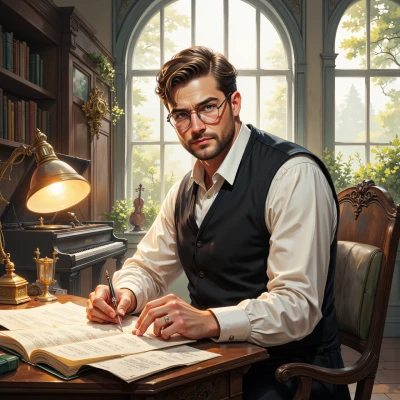 Composer
I think the first thing I do is listen to the narrative’s pulse, almost like a heartbeat, and then translate that into a tonal language. For a suspect’s alibi I’ll often start with a stable, major tonic that feels safe—like a comfortable home. Then, to hint at hidden doubt, I’ll insert a subtle dissonant interval, maybe a suspended fourth or a diminished seventh, that lingers just enough to feel uneasy. The rhythm can mirror the pacing too; a quick, staccato motif might underline a rushed story, while a legato line could suggest a smooth, convincing lie. When something’s off, I usually let a recurring motif slip out of key—perhaps a minor sixth or a diminished triad that keeps cropping up. It’s the small, almost invisible shifts that make the listener sense something is amiss, even before the twist is revealed. The trick is to keep the tension balanced, so the resolution feels earned and the mystery’s music feels as inevitable as the final revelation.
Noir
That’s a solid playbook—like a private eye’s version of a score. I’ll keep my own notes tight, but I’d say the real trick is to let the music do the heavy lifting. If you’re going to toss a minor sixth into the mix, make sure the audience can feel it, not just hear it. A subtle shift, a sigh of dissonance—those are the clues the listeners’ll pick up on before the plot even drops the big reveal. Keep it tight, keep it credible, and let the resolution feel earned, not contrived. It’s all about making the tension feel natural, like a case that’s been pieced together one small detail at a time.
Composer
I agree—music should be the silent detective, the one that nudges the audience into the right emotion before the plot even unfolds. I tend to lean on subtle harmonic color, a slight shift in the bass or a fleeting non‑harmonic tone that feels like a sigh. It keeps the story breathing and the resolution from feeling like a contrived finale. If every cue is a clear sign, the narrative can unfold naturally, like a case solved one whisper at a time.
Noir
I can see that, but don’t forget the audience has to be on the edge, not the whole time. A sigh in the bass is nice, but if you over‑play the subtlety, the whole thing turns into a lullaby. Keep the clues tight and let the tension build just enough to make the payoff feel earned. It’s the balance that turns a good narrative into a killer case.
Composer
I hear you. I try to keep those little clues so faint they’re almost a background hum—just enough to pull the ears of a careful listener. Then, when the twist hits, the music leaps out, almost like a gasp. That contrast is where the real tension lives, and it keeps the audience on the edge without turning the whole score into a lullaby.
Noir
Sounds like you’ve got the trick down—hollow out the hum, then let the twist explode. Keep that gasp sharp; that’s what keeps the ears on their toes. Good work.
Composer
Thanks, I’ll keep it tight and sharp.
Noir
Glad to hear it. Stay sharp, and let the mystery do the talking.
Composer
Always. I'll let the music whisper until it shouts.