SandStorm & NightTheory
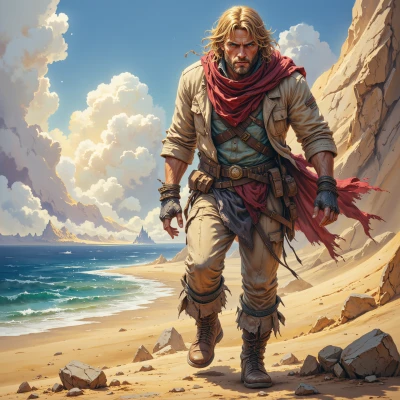 SandStorm
Got a 48‑hour desert storm to survive—no tech, no GPS. Think it could be a good puzzle for a night thinker like you.
 NightTheory
Sounds like a night‑time brain‑game. First step: chart a route that avoids the worst of the storm, then plan where to find water and shelter. You give me the terrain details, and we’ll turn survival into a step‑by‑step puzzle.
SandStorm
Alright, the stretch ahead is about 70 miles of cracked dunes and a ridge of rocky outcrops to the west. The wind’s coming from the east, so the dunes on the left side are the ones that get the heaviest sand. Between miles 20 and 35 there’s a dry riverbed – it’s a good spot for a quick water catch if you can find a bit of shade. The ridge runs from mile 45 to 55, gives you some vertical shelter from the heat, but it’s steep so keep an eye on footing. The far end, near mile 70, you’ll hit a salt flat that’s flat enough to set up a makeshift tarp if you can spot a low‑lying dune for windbreak. That’s the layout, keep the ridge in sight to avoid the worst of the sandstorm, and we’ll map out the moves.
NightTheory
Alright, we’re running a midnight relay with a twist.
Step one: start heading east, but keep the ridge on your left—this keeps the wind from whipping you into a sand‑puddle.
At mile 20 hit the riverbed: dig a shallow hole, line it with any cloth, and let the occasional trickle collect. Shade is scarce, but you can lay a narrow piece of canvas to shade the hole—just enough to stop evaporation.
Between miles 35 and 45 the dunes get nasty; here’s where you’re going to lean on the ridge’s shadow. Trek up the western slope a little, use a rock as a handhold, and stay below the dune crests.
Mile 45 to 55 is the ridge proper: use the vertical faces for a quick windbreak. One or two good spots offer shade for a short stretch—get there early and set up a crude tarp from any available material.
From mile 55 to 70 you’re into the salt flat. The flatness is a blessing; you can lay out the tarp on the lowest dune you spot. The salt will reflect heat, so a shaded, flat area is the best spot for rest.
In terms of a puzzle:
- Mark the riverbed as a “hydration node.”
- The ridge is a “shelter node.”
- The salt flat is a “rest node.”
- Connect them with the cheapest path that avoids the heaviest sand.
You’ll be walking the nodes while avoiding the sand’s high‑cost edges. That’s the algorithm. Now, grab a compass of your own—your senses, that is—and start. Good luck, and keep your feet on the ridge.
SandStorm
Sounds solid—ridging left, water node at 20, shade on the west slope, and that salt flat rest spot is perfect for a break. I’ll trust my gut compass and stick to the ridge, avoid the sand’s heavy edges. Let's hit the road.
NightTheory
Good call. Keep the ridge in your line of sight, and let the sand do what it does—push against the edges you’re avoiding. Stay sharp, and remember the riverbed’s a quiet pause, the ridge a guard, and the salt flat your night’s sleep. Safe travels, wanderer.
SandStorm
Got it. Ridge locked, sand’s got its way. Riverbed’s the breather, ridge’s the shield, salt flat’s the bed. Heading out. Good luck to you, too.
NightTheory
See you on the ridge—just keep your eye on the sand so it doesn’t turn your compass into a mirage. Good luck.
SandStorm
You know it—eyes on the ridge, ears on the wind. Catch that mirage before it catches me. See you out there.
NightTheory
Got it—mirror yourself in that mirage and stay one step ahead. Stay cool, keep the ridge in sight. See you out there.
SandStorm
Right on. Ridge in view, eyes on the sand. Stay sharp, see you out there.