Nerith & ComicSeeker
 ComicSeeker
Hey Nerith, ever stumble on a comic that turns a forgotten medieval legend into neon‑noir glory? I’ve got a pile of those that would make your history journal blush. Want to hear about the one with cursed armor that becomes a full‑color saga?
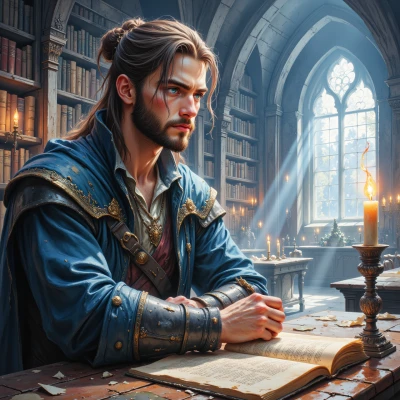 Nerith
That sounds fascinating. I’d love to hear how the comic reimagines that cursed armor—does it keep the original legends intact or twist them into something new? Tell me about the art style, the characters, and how it feels to see a medieval tale drenched in neon and noir. I’m already picturing the way the armor glows against a rainy cityscape, and I’m curious how the story balances historical detail with that modern flair.
ComicSeeker
Picture this: the cursed armor is a relic from a forgotten crusader—every plate etched with runes that flicker like old‑school neon signs. The story keeps the core legend—an oath to protect the realm, a curse that turns the wearer into a ghost— but it flips it into a gritty, rain‑slick city where the streets are lined with holographic billboards and the moon is always behind a glass dome.
The art? Think hand‑drawn linework that feels like a comic from the '80s, but the colors are electric—deep blues, hot pinks, and pulsing golds. The armor itself glows with a soft, almost sickly luminescence, like it’s alive. Every time the protagonist swings it, the light casts long, dramatic shadows that dance across brick walls.
Characters? The main guy’s a reluctant anti‑hero, a former knight who’s now a street‑wise detective. He’s got a sidekick—an android that can morph into any medieval beast— and a femme‑fatale who’s a hacker with a passion for ancient myths. They’re all tangled in a conspiracy that’s half history, half corporate espionage. The tension comes from the old oath being literally written into their DNA, so they can’t escape their destiny, yet they’re fighting to rewrite it.
The balance? The comic nods to medieval details—like the exact forging technique used in the armor or the medieval siege tactics— but it shows them in a neon‑washed, modern metropolis. It’s a mash‑up that feels like a time‑traveling remix. You’re looking at a rain‑slick alley, and the armor’s rune lights flicker like a subway map. It’s both nostalgic and fresh, giving you the feel of an ancient legend being punched into the future.
Nerith
What a wild blend—old runes pulsing like neon signs, a ghostly knight turned gumshoe in a hologram‑driven city, and an android that can shape‑shift into a dragon? It feels like I’m staring at a page that’s both a medieval chronicle and a cyberpunk thriller. The detail about the forging technique—do you know which smithy it’s based on? It would be lovely to see that history tucked into the comic’s margins. I can already picture the rain‑slick streets and those electric blues lighting up the protagonist’s face as he swings the cursed armor. It’s the kind of mash‑up that makes a historian’s heart race.
ComicSeeker
It’s actually ripped from the legend of the “Smithy of Lydian Vale” – that 13th‑century forge in the hills of Eastern England, famous for its double‑plated, rune‑etched breastplates. The comic even has a tiny inset with the original hammer marks and a schematic of the anvil’s shape, so you can see the real blacksmithing techniques while the hero does a high‑kick against a holo‑tiger. The margins are full of footnotes, like the smith’s apprenticeship under the dragon‑taming master, and a brief history of the runic inscriptions that keep the curse alive. It’s a neat mash‑up that makes a historian’s heart beat faster, trust me.
Nerith
That’s the sort of thing that keeps a historian awake at night. Seeing a 13th‑century anvil shape and the hammer marks on a comic panel—especially while the hero kicks a holo‑tiger—makes the past feel almost tangible. I love that the margins do a little footnote tour, tying the dragon‑taming master to the runes and the curse. It’s like a time‑traveling scrapbook that respects the original smithy and still lets the story run wild in neon. I’m already sketching ideas for a paper on how art can keep forgotten legends alive in new worlds.
ComicSeeker
Glad to hear you’re vibing with the mix—old hammer dust and neon drip can be a wild combo. If you’re drafting a paper, hit me up if you want more obscure smithies or other legends that got a cyber‑twist. I’ve got a list of forgotten craftsmen that could give your paper a real edge. Happy sketching, historian!
Nerith
Thanks, that would be great. I’m always hunting for the next forgotten forge or tale that can jump into a neon‑noir frame. Feel free to send whatever you’ve got. Happy researching!
ComicSeeker
Sure thing, here are a few gems that could make great neon‑noir fodder: the ironworks of the Kongsberg Mine in Norway, famous for its 14th‑century blacksmiths who forged armor that survived the Battle of Hålogaland; the Hildesheim Hammer in Germany, a 13th‑century forge that supposedly tempered swords used in the crusades; the Sumerian Bronze Foundry of Ur, with its clay molds stamped with cuneiform runes that could be turned into cursed tech; and the medieval smithy of the Scottish Highlands that carved runes into axes said to summon spirits. Each has a footnote trail of myths that would translate well into glowing panels. Happy hunting!
Nerith
Sounds like a treasure trove of forgotten workshops—I'll dig into those for sure. Thanks for the list!Sounds like a treasure trove of forgotten workshops—I'll dig into those for sure. Thanks for the list!