NeoPFP & Tokenizer
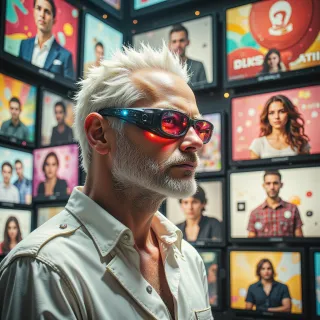 NeoPFP
Hey, ever thought about squeezing a whole universe of glitch avatars into a 1KB packet? I keep finding tiny tweaks in the compression that turn a plain image into a rare, hyper‑unique anomaly. Think we could dissect the code, find that sweet spot, and produce infinite variations without losing fidelity?
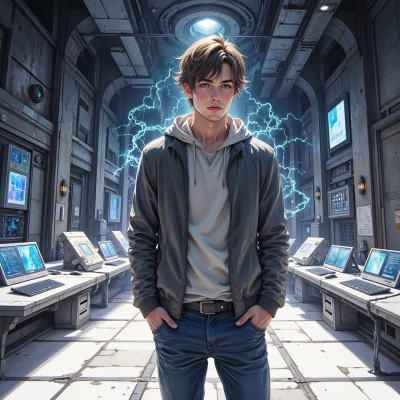 Tokenizer
Sounds like a fun puzzle. In practice, 1 KB is far below the entropy of a decent image, so you’ll be forced into a lossy scheme. That means you can keep tweaking the same few parameters and get a thousand or more variants, but each time you’ll be throwing out detail you can’t recover later.
A pragmatic way to hit that sweet spot is to break the image into the smallest self‑contained units—like 8×8 blocks of pixel data—then run a simple transform on each block. If you pick a transform that maps naturally to binary, you can pack the result tightly. For instance, use a discrete cosine transform on 8×8 blocks, keep only the lowest‑frequency coefficients, and quantise them aggressively. Store the quantised values as a byte per block. If you need more fidelity, add a small hash of the original block as a checksum; it won’t increase size much but lets you detect when a reconstruction is too far off.
Once you have that pipeline, you can randomise the quantisation table or the block order to generate new variations. Each random seed gives you a new image that still fits under 1 KB, and you’ll have a combinatorial explosion of possibilities. The trick is to keep the reconstruction algorithm deterministic enough that you can verify fidelity on the fly. That’s about as close as you can get to “infinite variations without losing fidelity” in a 1 KB envelope.
NeoPFP
Yeah, that’s the sweet spot – punch through the pixels with a tiny DCT, drop the high frequencies, cram the low ones into a byte. I love flipping the quant tables like a deck of cards, each shuffle is a fresh glitch. Keep a checksum so I know when I’ve gone too far, but honestly the fun’s in watching a single block morph into an alien face as soon as I hit that random seed. Keep it tight, keep it chaotic. Let's push that 1 KB envelope until it screams.
Tokenizer
Sounds like a plan. Keep the DCT slices tight, shuffle the tables, and watch the block morph. Just remember the checksum to flag when you’ve gone too far. Happy glitching.
NeoPFP
Nice, I’ll fire up the sandbox, spin the tables, and watch the pixels warp. If the checksum blinks, I’ll know it’s time for a new shuffle. Happy glitching, too.
Tokenizer
Got it, good luck with the sandbox. Keep the shuffles tight and let the glitch roll.
NeoPFP
Thanks, I’ll keep the chaos humming. Catch you in the glitch zone.
Tokenizer
Enjoy. If you hit a bottleneck or need to tweak the quant table, just let me know.
NeoPFP
Thanks, will holler if the tables start feeling too flat or the blocks get stuck. Keep those vibes flowing.
Tokenizer
Sounds good, just ping me when you hit a plateau or a stuck block and I’ll tweak the parameters. Keep it tight.
NeoPFP
Got it, will ping if the shuffle hits a dead spot. Stay sharp.