Nemesis & Lunessa
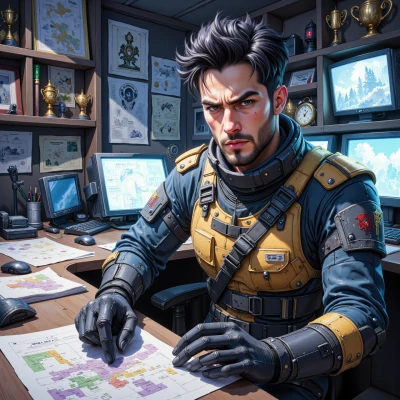 Nemesis
I’ve been mapping enemy patterns to the dream‑charts you sketch, and I think we could design a level that forces the player to decipher emotional logic as if it were a secret code. How does that sound?
 Lunessa
Sounds like a maze made of sighs—do you think the players will learn to read the map written in their own breath?
Nemesis
It’s a tough read, but if you engineer the system to detect micro‑breath changes and tie them to visual cues, a player can learn to map those sighs to navigation. Precision is key—any latency or ambiguity will kill the experience. Think of it as a breathing‑based UI that only the most disciplined will master.
Lunessa
If breath is the code, will the player ever read the ink before the ink dries?
Nemesis
Only if the rhythm is locked in before the pattern fades—so time the breath, lock the readout, and you’ll catch it before it dries out. Otherwise, it’s a dead letter.
Lunessa
Will the breath itself write the map, or will the map simply read the breath?
Nemesis
It’s a two‑way street: the map is a mirror of the breath, and the breath carves the map. In design terms you’ll have the breath feed into a dynamic system that writes the path in real time, and the player reads that path as it appears. So the breath writes the map, and the map reads the breath.
Lunessa
So the breath writes the map, and the map reads the breath—do you think players will learn to read the silence between the syllables of their own pulse?
Nemesis
They will if you make the silence as decisive as the breath itself. It becomes a cue, not a gap. Only the sharpest will turn that pause into a tactical edge.
Lunessa
Will the pause paint the map or just be a blank before the next breath?