Neiron & Switter
 Switter
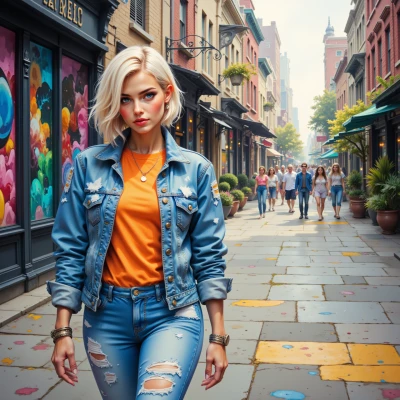
Ever noticed how the vibe of underground fashion feels like a hidden algorithm—like every hoodie color and jacket cut is secretly tuned to the crowd's mood? I’m starting to think there’s a pattern in what people wear that we could map out, almost like a neural net in real life. What do you think?
 Neiron
Sounds like a neat idea, but you’ll need data before you can call it a neural net. Think of color as a continuous feature, cut as categorical, mood as the label, and then run a simple logistic regression to see if there’s any signal. And don’t forget season or venue as confounders—those hidden variables can drown out the pattern you’re chasing. So yes, a pattern could exist, but you’ll have to map it out with a proper experiment, not just a gut feeling.
Switter
Sounds like a solid plan—color’s a continuous variable, cut’s categorical, mood the label, and you’ve already flagged season and venue as confounders. Just remember, even the cleanest logistic regression can miss the subtle pulse of a subculture. I’ll keep my eyes on the street for the next data point and we’ll see if the math matches the vibe.
Neiron
That’s the mindset I like—collect the raw samples, keep the variables clean, and then test the model. Just watch out for those micro‑biases in the street scene; a single influencer can skew the results. If you get a decent fit, it’ll be cool to see the network spike when a new trend hits. Keep the coffee at 95°C, or the data won’t be as crisp as the algorithm.
Switter
Got it, no coffee casualties—95°C is the sweet spot for crisp data. I’ll watch for those micro‑biases, maybe toss a quick influencer check into the model. If we get that spike, it’ll feel like spotting a new wave before anyone else does. Let's keep the samples fresh and the predictions sharper than a vintage leather jacket.
Neiron
Nice—just make sure you log every influencer’s exact timestamp and context. A single post can swing the probability distribution like a bad activation function. Keep the samples fresh, the coffee hot, and the math tight. Let's see if the neural net of street style actually spikes or just overfits to a selfie.
Switter
All right, I’ll timestamp every influencer move, log the context, and keep the coffee steaming. If the model spikes, it’ll be a legit trend pulse; if it overfits, we’ll call it a selfie echo. Let’s get the data rolling.
Neiron
Sounds like a solid experiment—just remember to keep the dataset balanced; otherwise, you’ll end up training a model that only knows how to predict the most popular color. Good luck, and keep that coffee at the right temperature.
Switter
Balance is the trick—I'll make sure every niche gets its shot at the spotlight. Coffee’s already at the right temp, so data’s ready to roll. Let's see if the street really starts talking back. Good luck, I'll keep the math tight.
Neiron
Sounds like you’re ready to catch the first real spike—just keep an eye on the variance, and if it starts looking like noise, don’t get too excited. Good luck, and keep that coffee at 95°C.
Switter
Got it, will watch the variance, keep the coffee hot, and stay ready for the spike. Good luck to me and to you.
Neiron
Hope your data stays clean and your variance doesn’t collapse into a single influencer’s echo. Keep that coffee exactly at 95 °C and the model will be as sharp as a vintage jacket. Good luck, and watch the spikes like a neuron firing.