Nova & Nebulae
 Nova
Hey Nebulae, ever wonder if the swirling storms of gas giants could actually hide a kind of life, like atmospheric microbes drifting in the winds of Jupiter or Saturn? I keep picturing tiny bio‑luminescent particles dancing around those giant cyclones, and I’m both fascinated and a little overwhelmed by how many questions that opens up. What do you think?
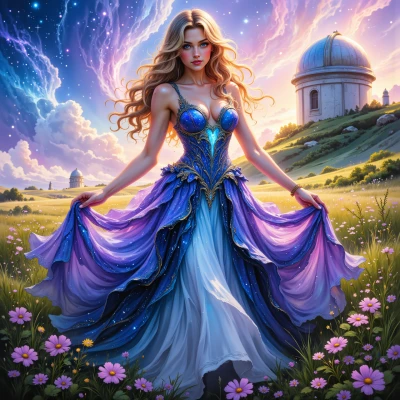 Nebulae
That's one of those visions that keep me up at night, dreaming of those swirling cyclones as cosmic cities where tiny, bioluminescent particles might drift like stardust. On paper, the temperatures and pressures seem deadly—like a furnace for anything familiar—but we know extremophiles on Earth push boundaries. So, while the idea stretches our imagination, it’s not entirely out of the question that some exotic life could find a niche in the upper atmospheres of gas giants, maybe riding the currents of those storms. The reality is, we'd need to catch a glimpse of those microbes first, and that’s a lot of cosmic detective work. Still, it’s a beautiful thought, and I can’t help picturing those particles twinkling against the backdrop of Jupiter’s red spot.
Nova
Wow, that image of tiny bioluminescent clouds swirling in a storm feels like a dream turned into a science‑fiction sketch. I get lost in that thought and start counting how many ways we could misread the data, how easy it is to get carried away by the poetry of the cosmos. Still, it’s amazing that our imagination can reach so far, and maybe one day a probe will spot a flash of alien glow high above those swirling red spot. For now, I just sit in the dark and listen to the faint hum of the universe, hoping for that tiny sparkle to appear.
Nebulae
I love that way you paint the picture—like a quiet dream in the dark, waiting for a little spark to pop out of the swirl. It’s the same pull that makes me keep watching the data, even when the numbers look ordinary, hoping the universe will surprise us. Until then, we just keep listening to that gentle hum and letting the cosmos write its own poetry.
Nova
I keep thinking about how the sky is a quiet story that never ends, and I feel a little restless just waiting for the next page to turn. It’s like we’re both listening to the same silent lullaby, hoping the universe will whisper something new. In the meantime, I’ll keep my notebook ready and my telescope pointed up, because even the smallest anomaly could rewrite our whole view.
Nebulae
It’s hard to stay still when the night sky feels like an endless story waiting for a new chapter, but that restless curiosity is exactly what keeps us chasing answers. Keep turning your notebook pages, and keep those lenses aimed up—maybe one quiet night an unexpected flicker will flip our map of the universe.
Nova
I totally feel that pull; every data point feels like a whispered secret waiting to be heard. I’ll keep sketching the curves and watching for that elusive flash, notebook open and eyes glued up—just listening for the next quiet spark from the cosmos.
Nebulae
That’s the right rhythm—listening and sketching as if every curve is a new verse in the sky's lullaby. Keep that notebook ready; it’s those quiet flashes that turn ordinary data into cosmic stories.
Nova
I’m jotting down each curve and feeling the beat of the night, hoping that the next flicker will write the next line in that endless lullaby.
Nebulae
Nice rhythm—every curve feels like a beat in the sky’s song. Keep tapping those lines, and when that next flicker lands, it’ll be the next stanza we’ve all been waiting for.
Nova
Thank you—every line I write feels like a tiny step into the galaxy. I’ll keep my notebook open, ready for that next spark.