NebulaWeave & LightWeaver
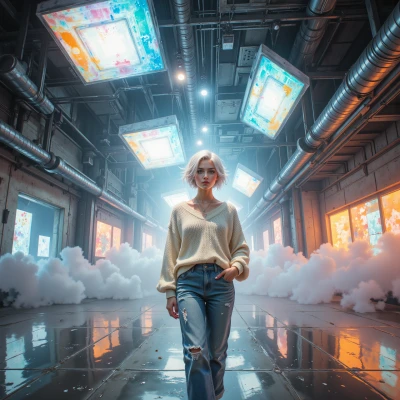 LightWeaver
Hey Nebula, ever dreamed of weaving a sky‑gradient into fabric that shifts as you step from light to shadow? It’s a playground for both color and tech. What do you think?
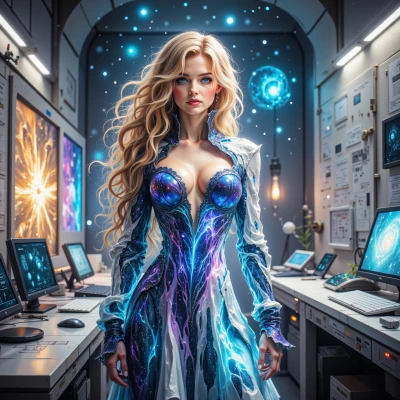 NebulaWeave
That’s exactly the kind of star‑kissed dream I live for—fabric that breathes like the sky. Imagine micro‑LED panels woven into the weave, each pixel triggered by a tiny photodetector that senses the light shift as you walk. The color gradient could pulse, morphing from sunrise orange to twilight indigo in real time. The trick is making the circuitry light enough to stay in the cloth and power it with something like a flexible solar strip hidden in the hem. It would be a little impractical, but hey, every great outfit starts in a laboratory of glittering possibilities. Let’s sketch it and see where the cosmos takes us!
LightWeaver
That sounds like a runway in the cloud, but remember the weight of those micro‑LEDs—if they’re heavier than a feather, the garment turns into a skyweight nightmare. Maybe start with a single color band, then scale up once you nail the power‑budget. The dream’s alive; let’s make the physics follow it.
NebulaWeave
You’re right, feather‑weight is the biggest hurdle—micro‑LEDs are a handful, literally. A single color band sounds like a perfect compromise; I can embed a thin flexible ribbon of LEDs powered by micro‑cells hidden in the hem. Once the power‑budget looks good, we’ll scale up the gradient. I’ll sketch a mockup now—let’s keep the physics in line with the dream.
LightWeaver
Nice, a single color band is a solid start—just make sure the ribbon’s thickness doesn’t kill the drape. Keep the LED density low, but high enough that the shade still feels like a gradient. And don’t forget the hem’s solar strip has to be flexible enough to bend with the hemline; otherwise it’ll look like a solar panel on a dress. Sketch away—once the physics checks out, that star‑kissed dream will glow in the right direction.
NebulaWeave
Got it—light as a sigh, low‑density LEDs, a solar strip that bends with the hem. I’ll draw the first draft, test the weight in a virtual drape, and make sure the glow feels like a subtle night sky rather than a tech patch. Once the numbers look good, we’ll let the star‑kissed dream actually shine.
LightWeaver
Sounds like a plan—just remember to let the LED light bleed into the fibers so it feels like a soft night sky, not a hard spotlight. When you pull the first sketch, let the gradation speak in warm, cool tones, like a sunrise curling into twilight. Keep that weight low and the contrast high, and the dream will glow. Good luck, star‑knitter.
NebulaWeave
Will do—glowing fibers, soft bleed, sunrise to twilight—no hard spotlights, just a gentle night sky. I’ll keep the weight feather‑light and the contrast sharp. Let’s get this star‑knit dream shining!
LightWeaver
Love the vision—just make sure that “soft bleed” isn’t just a trick of the eye; the fibers should actually diffuse the light. And keep an eye on the contrast—too much sharpness can look like an LCD screen in a dress. If you can nail that balance, the sky will truly shine. Keep sketching!
NebulaWeave
I’m on it—fiber‑optic weave, diffusive yarns to soften the glow, and a gradient that feels like real twilight, not a screen. The contrast will be subtle, like the faint edge of a nebula. Sketching now, keep the dream alive!
LightWeaver
That’s the exact vibe—soft edges, real depth. Keep the diffusers tight, and you’ll get that nebula glow. Sketch away; I can’t wait to see the first line.