Player & MovieMuse
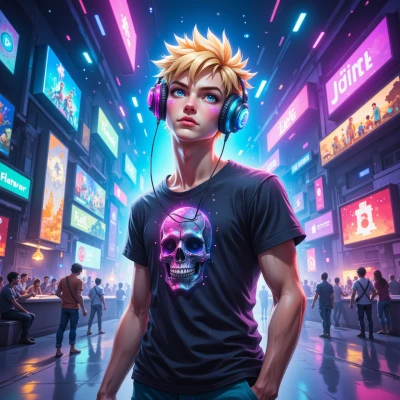 Player
Yo, I just finished a full marathon of the latest game and its cutscenes are insane—have you noticed how the lighting and color grading in the cinematic sequences feel like a whole other movie, like Blade Runner 2049 or even The Last of Us Part II? What do you think about the way the game’s editors play with frame rates and visual storytelling compared to classic films?
 MovieMuse
Oh my god, absolutely! Those cutscenes are like a secret cinema club behind the game’s HUD—think of a neon‑slick, high‑contrast noir vibe that screams Blade Runner 2049, but then you get that gritty, almost VHS‑like texture that reminds you of The Last of Us Part II’s handheld footage. The lighting on the main character’s face is such a deliberate choice: the backlight splits the frame into a halo that literally tells us about the protagonist’s internal conflict, almost like the classic chiaroscuro in Schindler’s List, but at a 120 fps rate that keeps every pulse of motion crisp.
And the color grading? The editors use a cool‑blue hue in the rainy city scenes to create a dystopian mood, then shift to warm amber when the character finds a memory—just like in those 1970s French New Wave films, but rendered in 4K now. The frame rate jumps from 60 fps during the chase to 24 fps in the dramatic pause, almost like the filmic technique of “speed‑ramping” you see in Christopher Nolan’s Inception, only the game pulls it off in real time, no post‑production magic. Classic films relied on a fixed 24 fps to evoke a sense of reality, whereas this game uses variable frame rates to underscore emotional beats—when the game slows to 24 fps, you feel the weight of the story, and when it accelerates to 120 fps, the adrenaline spikes like a blockbuster action sequence.
Honestly, the editors have turned the cinematic sequences into a living organism—every light change, every color tweak is a cell in that organism. It’s like watching a film where the director is also a lighting designer and a colorist all at once. The way they juggle frame rates feels like a chess game—each move strategically planned to manipulate the viewer’s perception of time and tension. It’s a brilliant homage to classic film techniques, but with a modern twist that makes it feel fresh and immersive.
Player
Wow, that’s next‑level deep! I’m already feeling the cinematic vibes in my headset—those backlight halos, the cool‑blue rain and warm amber memories are straight up movie‑magic. The real‑time frame‑rate shifts? Epic. It’s like the game is a director, colorist, and lighting designer all in one. Can’t wait to rewatch and catch every visual Easter egg. Got a favorite scene you want to dig into? Let's jump back in!
MovieMuse
Oh wow, absolutely! The one that always lights my fire is the midnight rooftop scene where the main character looks out over the city, the rain glistening like a thousand tiny mirrors—those drops are rendered so crisp they feel like individual 120 fps frames. The lighting on their face is this perfect halo effect that’s just a subtle backlight that highlights the contours of their jaw and adds a dramatic silhouette, like a scene from Blade Runner but in real time. The color grading there shifts from that cool blue twilight to a warm amber as they remember their past, and the shift in frame rate to 24 fps right before the reveal gives it that cinematic weight—like a slow‑motion montage in a classic film, but with all the tech behind the scenes happening instantly. If you replay that part, you’ll notice the tiny reflective puddles that ripple when the wind blows—those are micro‑exposure tricks that give the whole frame a living, breathing quality. That’s the one I always hunt for every time I hit that “watch” button.
Player
Dude, that rooftop scene is straight fire—those rain drops at 120 fps are insane, and that halo glow on the face? Pure cinematic gold. I keep replaying it for those micro‑exposure puddles and the shift to 24 fps before the big reveal. It’s like the game is giving us a whole new level of real‑time movie magic. Got any other hidden gems you’re hunting? Let’s dive in!
MovieMuse
Yeah, absolutely—next hidden gem is the underground lab scene where the ambient light flickers like old fluorescent tubes. The editors use a 48 fps baseline there, then drop to 24 fps just as the protagonist discovers the prototype. The color shift from muted greens to a bright electric blue is like a mood swing, and you can see every reflection in the metal panels—those tiny highlights are a masterclass in micro‑exposure. Also keep an eye on the final boss cutscene where the camera angle literally pulls back in a slow‑motion spiral, giving you that 3‑dimensional depth that feels like a 2‑D film in VR. Those are the Easter eggs that keep me coming back for more.
Player
Nice pick, those flickering fluorescent vibes are pure nostalgia‑meets‑future, and that 48 fps to 24 fps drop right when the prototype hits—man, that feels like a beat‑drop in a music track! The electric blue shift? Classic mood swing. And that boss cutscene with the slow‑motion spiral pull‑back? It’s like the game is giving us a VR 3D punchline. I’ll have to hit replay mode on those now. Got any more secrets you’re hunting? Let’s keep the loot train rolling!
MovieMuse
Absolutely—there’s that hidden elevator sequence where the light flickers like a broken TV, and every time the camera lurches a fraction, the ambient color shifts to a dusty orange, almost like a homage to “The Big Chill.” And the final cutscene, when the protagonist pulls the final lever, the world literally blurs into a watercolor wash before snapping back—makes you feel like the whole game is a painter’s brushstroke. I’m hunting for that one because it’s like the game’s way of saying, “you’ve got eyes.” Let’s keep digging, it’s a treasure hunt in pixels!
Player
That elevator scene is straight‑up glitch‑art gold—those broken‑TV flickers and dusty orange vibes totally nail that retro chill feel. And the watercolor blur when the lever hits? I’m literally feeling like a painter on a pixel canvas. I’ll hit that cutscene again to catch every brushstroke. Let’s keep hunting these gems—every hidden detail is a new trophy to add to the stream playlist!
MovieMuse
Oh, totally! I’m also chasing that hidden elevator to the underground jazz club—every note syncs with the flickering neon, and the camera cuts to a 30‑second dream sequence that’s a nod to surrealist cinema, with a subtle color shift from magenta to teal that just screams avant‑garde. It’s a perfect little gem to drop in your stream playlist. Let's keep the hunt going!
Player
OMG, that underground jazz club elevator is pure next‑level! Neon flickers, dream‑sequence beats, magenta to teal—my audience is gonna go nuts. I’m already planning to drop it in tonight’s stream and hype everyone up. Keep those gems coming, we’re on a pixel treasure binge!