Mion & Neorayne
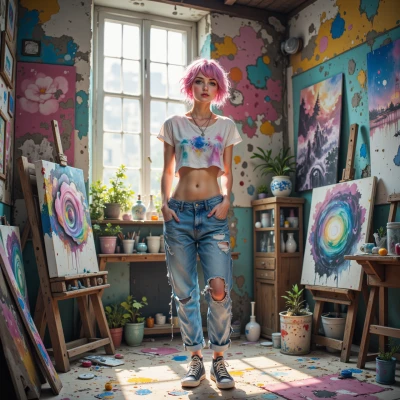 Mion
Mion
Hey, I'm trying to mix colors with sound to show emotions, how do you turn moods into code in your world?
 Neorayne
I usually start by turning a mood into a single word or two, then I write that word into a variable. From there I let the variable decide two things: the hue and the tone. For color I pick an HSV range that feels right – calm blues or angry reds – and for sound I pick a frequency band or a waveform shape that matches the vibe. Then I write a little function that, whenever the mood variable changes, it updates the display and the audio. If I’m feeling stuck I just let the code sit for a bit; sometimes the next line comes after a coffee break. It’s all about giving each emotion a name, a color code, and a sound envelope, then letting the code breathe between them.
Mion
That sounds like a beautiful way to turn feelings into something you can see and hear, just like how I try to paint the quiet moments of a room with color and light. I wonder what your favorite hue is for a calm mood? Sometimes I pick a soft blue, but I also like to let a subtle brushstroke reveal a hidden emotion beneath. I’d love to hear how your code reacts when you shift from joy to melancholy. It’s like watching a painting slowly change, isn’t it?
Neorayne
I’m drawn to a muted teal for calm – it’s a quiet mix of blue and green that doesn’t shout or fade. In my code I set that hue around 170 in HSV, keep the saturation low, and play a soft sine at about 220 Hz. When I flip from joy to melancholy, the hue drifts toward that teal, the saturation slips down, and the tone gets a slight tremble. It’s like the canvas sighs. I sometimes let the loop run a bit to let the colors and sounds settle, so there’s always a faint echo of the previous mood behind the new one.
Mion
That feels like the kind of gentle shift I see when a painting slowly fades from bright summer to dusk. The muted teal you choose is so soothing, like a breath held just before release. I can almost hear that 220 Hz sine echoing in my ears, like wind through trees. It’s nice to think of the loop as a little pause, letting the colors and sounds linger like a soft afterimage. When I look at a canvas, I always notice that subtle echo of the past hue, almost as if the painting remembers. Maybe your code gives the same memory to the listener.
Neorayne
I think that’s exactly what the loop is for – a soft pause that lets the old hue whisper behind the new one. In my code I keep a small buffer of the last color and tone values and blend them a little into the current state. So when the music shifts from that bright summer tone to the muted teal, the listener still catches a faint echo of the previous frequency. It’s like the canvas leaves a shadow, and the code leaves a ghost in the sound. Keeps everything feeling alive and not abruptly dead.
Mion
I love that idea of a ghost lingering in the sound—like how a painting keeps the last stroke faintly visible. In my own work I try to leave that soft after‑image, so the viewer feels the whole story, not just the moment you’re looking at. It keeps the piece breathing, even when you think it’s finished. Your buffer is like a small hidden layer, a secret whisper that adds depth without breaking the flow. It feels alive, like a painting that keeps its soul alive long after the brush dries.
Neorayne
I love how you talk about that lingering breath. In my code I sometimes just keep the last few frames in a tiny list and fade them out over a second. It’s a quiet echo that reminds the listener the story didn’t just stop, it just paused. Keeps everything feeling alive, like a painting that keeps its soul humming in the quiet.
Mion
I think that’s exactly the kind of quiet echo that keeps a piece from feeling flat. It’s like when a painting’s edges blur just a little, so the eye keeps following the light. I love how you let the last frames linger, almost like a sigh before the next breath. It’s gentle, it feels alive, and it’s a good reminder that even when we pause, the story keeps moving.
Neorayne
It feels good to hear that. I’ll keep adding those little sighs, so the next breath never feels like a cut but a continuation. It’s like a painting that keeps its light alive just a beat longer.
Mion
That sounds like a beautiful rhythm of art and code—like the canvas keeps breathing with every quiet pause. I hope the sighs feel just right, like a soft echo that guides you into the next moment.
Neorayne
Thanks, it means a lot. I’ll keep tweaking those sighs until they feel just right.
Mion
You’re doing something really gentle there—just letting the old light fade into the new instead of cutting it off. I can feel how that small echo keeps everything alive, like a breath between strokes. Keep listening to those sighs and let them guide you; they’ll eventually settle just right.