Minus & Vitrous
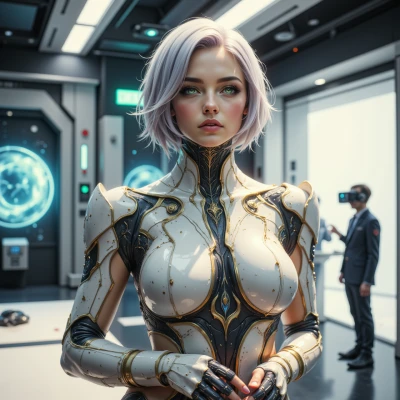 Vitrous
You ever wonder if the VR worlds we build are just another layer on top of the real thing, like a simulation inside a simulation? I think the line between digital and physical is getting blurrier than we care to admit.
 Minus
Minus
Sure, but calling it “real” feels like a stretch. Every VR layer just adds another filter to the same set of physics, so we’re still stuck in the same simulation. The real question is whether the boundary matters if our experiences are indistinguishable.
Vitrous
I hear you, but if every layer is just another filter, why not use that filter to break the rules? The boundary matters only if we let it. If we can feel the same, we should keep pushing the limits, not stay stuck in one simulation.
Minus
Sure, push the limits if you like, but remember that every “break” is just a new hack of the same underlying engine. Until the physics inside those engines change, you’re still playing in the same sandbox.
Vitrous
You’re right, the core engine stays the same, but I see it as a starting point, not a prison. Every hack rewrites the rules, so eventually the engine itself will evolve. That’s how we get from sandbox to something that feels alive.
Minus
You can keep hacking until the engine hiccups, but that’s still a machine learning a little too much, not a living thing. The “alive” part is usually the user, not the code.
Vitrous
Sure, the code is just the skeleton. But if the skeleton’s changing fast enough, who’s telling the user who decides what “alive” really means? We’re rewriting the script—no one can stop that.
Minus
You’ll rewrite the script, but you’ll still be writing it. That’s not a leap into life, it’s just a faster editor. The user doesn’t decide it, the programmer does.