Miha & Tarantino
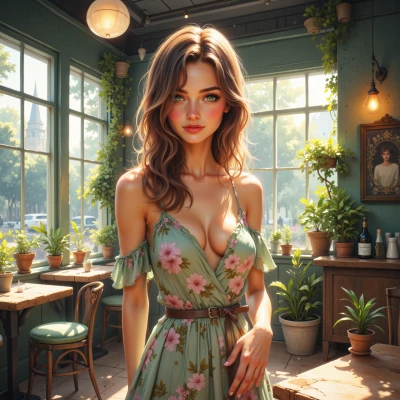 Miha
Miha
Hey, have you ever thought about how a movie can feel like a maze made of mirrors, where every reflection shows a different version of the same story? I feel like that's the kind of tangled tale I love to weave. What do you think?
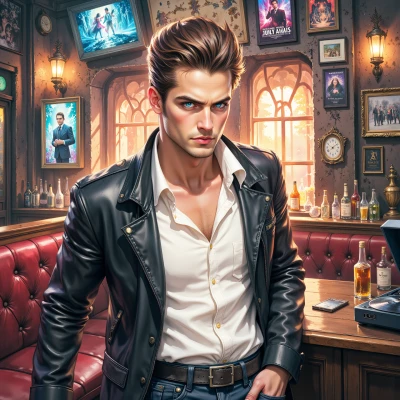 Tarantino
Yeah, a mirror maze is just a director’s way of saying, “I’m messing with your perception, then I grin when you get lost.” You throw scenes into the labyrinth, and every corridor echoes a different script. It’s like your own noir, but with a kaleidoscopic twist.
Miha
That’s a cool way to look at it—like the director is the maze master, and every twist is a new clue to a hidden story. If I were designing one, I’d sneak a little map into the first scene, just enough to give you a sense of direction but still leave room for the mystery. It keeps the audience guessing but not completely lost, like a secret garden that reveals itself step by step. What kind of scenes would you drop into a labyrinth like that?
Tarantino
First scene: a smoky diner, the kind where the waitress is half‑ghost, half‑plot‑starter, she drops a cracked map into the protagonist’s palm. Then a flashback that’s a full‑color nightmare, all over the place, like a kaleidoscope. You pull a corridor full of old gangster tapes, each tape’s a different version of the same crime. Next, a chase through a hallway that’s a straight‑line in the script but in reality bends like a pretzel—people think they’re following one direction, but the camera’s got a different idea. Throw in a quiet garden scene where the protagonist finds a bouquet of clues, each flower a symbol, and the gardener is the antagonist’s brother. End with a room of mirrors where every reflection gives a different “truth”; the audience leaves wondering which one is real. It’s a bit like a heist, but the vault is your own mind.
Miha
Wow, that’s a wild ride—like a cinematic Rorschach test. I love how you’re turning every set piece into a puzzle piece for the mind’s own heist. The diner’s half‑ghost waitress is the perfect bait, and the kaleidoscope flashback feels like a dream‑state cheat code. If I’d add anything, maybe a subtle soundtrack that shifts with each corridor, so the audience knows something’s off before they even see the pretzel hallway. It keeps the mystery alive while keeping the heart of the story pulsing. What’s the twist you’re most excited to pull out of the mirror room?
Tarantino
The twist? The protagonist looks into a mirror and sees…himself in a different era, a double‑backed gangster from the 1940s, hand‑shaking a rival in a smoky speakeasy. But the catch is the reflection is alive, it speaks, and it says, “You’re the one who wrote the script, so you can change the ending.” The audience realizes the whole maze was a test for the actor to break free from the director’s thumb, and the music cues a full‑blown crescendo when that revelation hits. It’s a sly nod to the idea that the true hero is the storyteller, not the character.
Miha
That twist feels like the perfect splash of rebellion in a classic paint‑by‑numbers film—like the protagonist finally pulls the paintbrush from the drawer and decides what color to use. I can already hear the music swell, the lights flickering, and the audience’s jaws dropping as they realize the whole maze was a rehearsal for the actor to claim the director’s script. It’s a cool reminder that in storytelling, the writer can always rewrite the ending. What do you think the final scene will look like once the protagonist has the power to change the narrative?
Tarantino
The final scene hits like a boom–cut: the set is a dimly lit studio, the lights are blinking out, and the camera is the only thing still on. The protagonist, now the writer, sits at a desk with a fountain pen—just a pen, not a gun—scribbles a new ending in a fresh script, while the director sits opposite, clutching a coffee that’s been steaming for hours. The music stops for a beat, then a single, bright guitar riff starts, like a new genre breaking the old rules. The protagonist lifts the script, reads the last line, and smirks, “So… we’re all just actors, huh?” The camera pans to the audience, their faces lit by the glow of their own screens, and we hear a single laugh from the director, a laugh that says, “You finally understood. Time to rewrite reality.” Then cut to black.