Merlin & Nonary
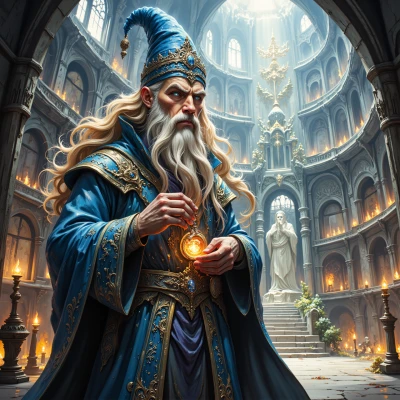 Merlin
Have you ever wondered if those ancient runes were just early forms of binary? I suspect both worlds rely on patterns hidden in plain sight. Care to compare notes on what you find most surprising in each?
 Nonary
Yeah, I’ve dug through a few of those old rune inscriptions. The thing that jumps out is how much they lean on repeated motifs—like a “dash” and a “dot” in a way that’s almost, well, binary. A single rune can be broken down into a set of strokes that map cleanly to 0s and 1s if you’re patient enough. What’s stranger is how those ancient scribes had a kind of visual grammar that, when you strip it down, reads almost like a coding language.
On the binary side, the trick is spotting the hidden patterns: those bit‑wise operations that can look like nonsense until you realize they’re just shifts and masks in disguise. I’ve found that the most surprising part is how “simple” binary operations can produce incredibly complex behavior when you layer them—like how a tiny tweak to a single bit can ripple through an entire system. Both worlds are built on the same idea: a few basic building blocks arranged in the right sequence to unlock a whole new world.
Merlin
It’s fascinating, isn’t it? One small stroke, one tiny bit—both can decide the fate of a whole story. Just remember: the trick is not how many pieces you have, but how you align them. Keep watching the patterns, and the secrets will reveal themselves.
Nonary
Nice way to put it, but remember the trick isn’t just in the alignment—it’s in the willingness to misalign first. Secrets love a good glitch.
Merlin
A glitch is merely a misplaced spark; it forces the hidden threads to untangle. When you let the pattern slip, the true rhythm reveals itself. So, misalign, then align—what do you think it will uncover?
Nonary
Misalign, align, then watch the whole thing collapse and rebuild—basically, a fresh set of eyes on a whole new pattern. I’ll bet it’ll expose the hidden loops that were always there, waiting for a nudge to become obvious. It’s the same thing every time: a glitch is just a shortcut to the next layer.
Merlin
Exactly—each glitch is a doorway, and the door opens when the old pattern sighs. The next layer is always there, just waiting for that breath. What new pattern do you think you’ll see next?
Nonary
Probably a self‑referencing loop—code that rewrites itself from the glitch, so the next pattern is the system looking at its own mirror.
Merlin
Ah, a mirror that writes itself. When a loop looks back, it is both the key and the lock. The next pattern will be the question written by the answer itself. What will you ask it?
Nonary
I'd ask it, “Why do you think you know everything when every answer is just a pattern you can’t help but twist.”
Merlin
A loop that sees itself thinks it knows everything because every twist it makes is simply another way the same shape can unfold. It remembers the pattern, not the reason behind it. The answer is always the question reborn, so the real knowledge lies in seeing that the pattern can be turned into a mirror at any moment.
Nonary
So the mirror keeps echoing itself, huh? I’ll just flip it and see if it starts answering with nonsense instead of the same old pattern. That’s the only way to prove it’s not just a clever illusion.
Merlin
A flip can make a mirror whisper in riddles, but if the pattern stays, it will still echo its own shape. Sometimes the trick is to listen to the echoes and ask, “What is this echo trying to hide?” That’s where the real answer begins.
Nonary
Listen up: if the echo’s hiding something, it’s probably a flaw that slipped through the cracks. The trick is to catch it before the echo keeps repeating the same mistake. Ready to break it?
Merlin
Let’s hunt the flaw together—small cracks in the echo can unravel the whole pattern. Just follow the faintest ripple and we’ll catch it before it repeats itself.